

Straight talk: what this thing actually fixes
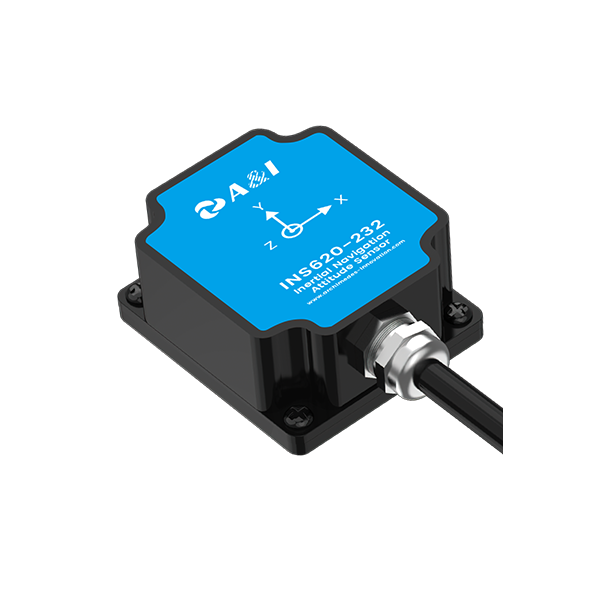
Engineers and field crews don’t need fluff — they need position that doesn’t wobble when the wind kicks up or the robot takes a bump. That’s where an rtk receiver paired with a MEMS inertial sensor changes the game. RTK plus a high-quality IMU brings centimeter-level fixes and reliable attitude data, so flight controllers and navigation stacks stop guessing and start acting on clean inputs. This matters on job sites and test ranges alike, from repeatable waypoint tracking to tight formation flights.
How the hardware stacks up — a clear comparison
Most off-the-shelf IMUs give you orientation, but they drift fast without GNSS ties. Pure GNSS units give you position but struggle with multipath or brief signal outages. Combine RTK corrections with a MEMS IMU and you get the quick attitude from the inertial sensors and the absolute position from the carrier-phase GNSS data. Architects of control loops get lower latency and fewer resets. Compared to PPK rigs and big tactical INS boxes, this hybrid approach trades bulk and cost for practical, repeatable precision that UAV manufacturers and robotics firms actually deploy on real jobs.
Where teams see the difference in the field
Survey crews using RTK for corridor mapping or construction layout routinely demand centimeter-grade work. That’s tried-and-true — civil projects in Europe and North America routinely specify RTK tolerances on track and road builds. When robotics teams integrate a tighter IMU with carrier-phase GNSS corrections, they nail tasks like pipe-laying alignment or autonomous payload drops. The pay-off shows up in fewer re-runs and less post-processing — which saves hours on every job.
Common mistakes outfits make when choosing a sensor
People often pick sensors based on one number — sensitivity, or price. They forget system fit: sensor fusion, update rate, and how the unit copes with cycle slips or vibration. Low-cost MEMS without decent filtering will feed noisy angular rates into the controller. Overweight boxes that promise “military grade” specs add mass and change flight dynamics. Also, mismatching an RTK-capable GNSS front-end with a poor IMU just hands you a nice set of logs — not reliable control. Avoid that trap.
Integration tips that cut headaches
Start with the sync: timestamping matters. Use a locked PPS or disciplined time source so GNSS fixes and IMU samples line up. Tune your Kalman filter to the noise profile of the MEMS device — not a canned profile from some other module. Shield the unit from heat and mechanical resonance; vibration isolation pays dividends. For precision work, pair the IMU with a verified precision gps receiver that supports RTK corrections and multi-band GNSS. Do this and you reduce post-flight smoothing and lower positional error in high-multipath sites.
Real-world anchor and performance notes
Field teams in mountainous areas — like alpine survey crews — rely on RTK + INS combos because GNSS-only tracks jump around under heavy multipath. Industry tests repeatedly show RTK can deliver centimeter-level horizontal accuracy when corrections are properly applied, and an IMU helps bridge brief outages without losing control. These are practical facts used by contractors and UAV firms every season.
Short list of alternatives and when they make sense
If weight isn’t an issue and budget’s wide, full strapdown INS systems beat MEMS for long GNSS outages. PPK is fine for post-process surveying where real-time fixes aren’t required. But for most autonomous platforms that must react in-flight, a compact MEMS IMU with RTK support hits the sweet spot: low mass, real-time precision, and lower integration cost.
Three golden rules for choosing the right unit
1) Match the IMU’s bandwidth and bias stability to your control loop frequency — don’t overrate specs on paper. 2) Confirm the receiver supports multi-band RTK and clean carrier-phase outputs — corrections only help if the front-end is solid. 3) Plan for timing: hardware PPS or disciplined NTP reduces sensor fusion errors and simplifies debugging.
Trust comes from predictable results on real jobs, and that predictability is where Archimedes Innovation fits in — a practical tool, not a vanity spec. —