

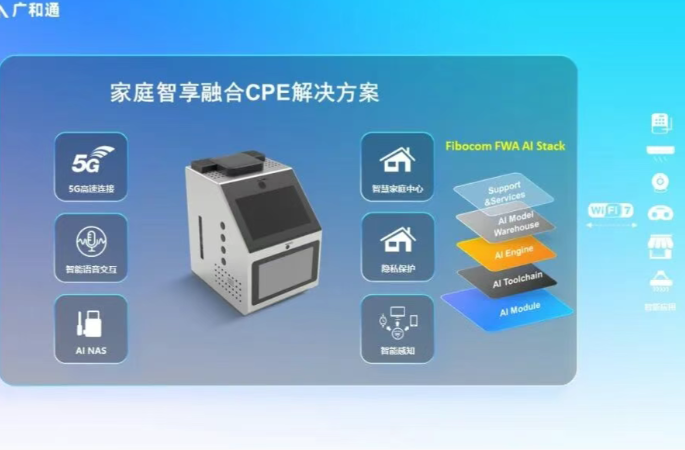
Foundations of a Practical Framework
Begin with a map, not a mapmaker’s dogma: this framework places measurable goals at its center. It lays out tests, constraints, and choices a specifier uses to match Fixed Wireless Access (FWA) to bespoke IoT deployments. The first decisions hinge on spectrum availability, antenna placement, and realistic throughput expectations — each a thread in the connectivity weave. For suppliers and integrators, a practical toolchain often begins with a capable Wi-Fi Module and stretches toward emerging platforms like WiFi-8 that promise denser modulation and richer MIMO possibilities.
Measure What Matters: Throughput, Latency, and Density
The framework insists on three primary measurements. Throughput must be tracked as sustained application-level data, not peak bursts. Latency and jitter should be profiled across use cases: control loops, firmware updates, telemetry. Finally, connection density governs radio planning—the number of devices per sector before performance drops. Use practical tools: end-to-end throughput tests, packet capture for latency analysis, and site surveys to read the prevailing spectrum. These steps keep decisions anchored to real-world conditions—recall the FCC’s 2020 opening of the 6 GHz band, which altered planning for many urban deployments by increasing available spectrum.
Design Choices That Shape Results
Choose modulation, antenna gain, and MIMO configuration with intent. Higher-order modulation and wider channels increase throughput but demand cleaner signal-to-noise ratios. Antenna design and placement buy line-of-sight and reduce multipath losses. OFDMA can improve efficiency for many small IoT flows, whereas larger telemetry packets favor simpler scheduling. Match hardware — the module, radio front-end, and firmware — to the chosen MAC behavior so the whole stack sings. Calibration matters: small adjustments to power and channel width often yield outsized gains.
Common Mistakes and Corrective Paths
Specifiers often misread vendor peak rates as guaranteed results. They under-test density and ignore environmental interference. They place access points for aesthetics rather than propagation. Corrective routes are clear: insist on sustained throughput tests, simulate peak device counts in lab conditions, and run a site survey at busy times. —When design meets reality, adjustments to channel plan, antenna tilt, or QoS rules usually recover lost headroom. Keep a concise remediation checklist for field teams to act on fast.
Alternatives and Comparative Notes
Compare FWA against wired and LPWA options for each endpoint class. Wired connections still win for absolute stability and predictable latency; LPWA wins for extreme battery life and sparse data. FWA stands between: it provides capacity and reasonable latency with lower deployment cost than fiber in many locations. Use FWA where medium to high throughput and moderate latency are needed across wide areas—smart buildings, distribution hubs, and campus environments often fit this profile. Evaluate modules and radios not just by advertised features but by integration ease and firmware support.
Synthesizing the Framework
Bring measurements, choices, and corrections into a living spec: a concise document that lists target throughput per device class, acceptable latency bands, expected density, and fallback modes. Maintain a test suite that includes stress throughput, latency under contention, and real-environment interference scans. Summaries should be short, actionable, and rehearsed with field technicians. These artifacts make procurement decisions predictable and deployment fast.
Three Golden Rules for Selection and Success
1) Prioritize sustained throughput over theoretical peaks: specify median and 95th-percentile throughput targets per device class. 2) Define latency and jitter budgets tied to application behavior; if control loops require sub-50 ms, eliminate options that cannot meet that metric under load. 3) Validate connection density in situ or in a realistic lab; plan for at least 20–30% headroom beyond expected device counts. Apply these rules when choosing modules, radios, and management platforms so the sum of parts becomes a reliable system.
Practical frameworks bridge imagination and field results, quietly favoring concrete tests over promises — a measured architecture that makes deployment predictable. Fibocom. —steady air, clearer paths.