
Start with the real problem: what do you need it to do?
You’re not buying a pretty roof — you’re solving stubborn daily problems: midday glare, sudden rain, a dull patio, or a desire to generate power. If shade that also feeds the house is on your list, a solar pergola answers two questions at once. Think use first, style second. Measure how you live outdoors before you shop; the rest follows.

Choose blade style by problem, not by trend
Fixed louvres are simple and nearly maintenance-free — good if you want constant shade or a dramatic architectural line. Adjustable blades solve the sun-angle problem: open for breeze, tilt for rain. Motorised rotation fixes the daily chore, but adds wiring and a point of failure. Match the blade action to the recurring annoyance you face: sun heat, rain, or view obstruction. Keep the mechanism accessible for service.
Material decisions that pay off over time
Aluminium resists rot and coastal salt; hardwoods hold character but demand varnish and inspection. Powder-coated aluminium keeps finish longer; aluminium with thermal breaks helps if you have hot afternoons. Look at fasteners and bearings — they tell you whether the whole structure will age gracefully or fall into squeaks and wobble. Ask for long-term warranty terms and exact replacement part costs before you commit.
Controls, motors, and the small engineering questions
Wireless remotes are convenient until batteries die; hardwired switches are cleaner but require an electrician. Automated rain sensors and wind cutouts stop damage, but they fail if poorly rated. Choose motor types with serviceable gearboxes and clear access panels. Keep control logic simple: one scene for “open,” one for “closed,” one for “vent.” Complexity is seductive; simplicity survives.
Solar integration, evidence, and what actually works
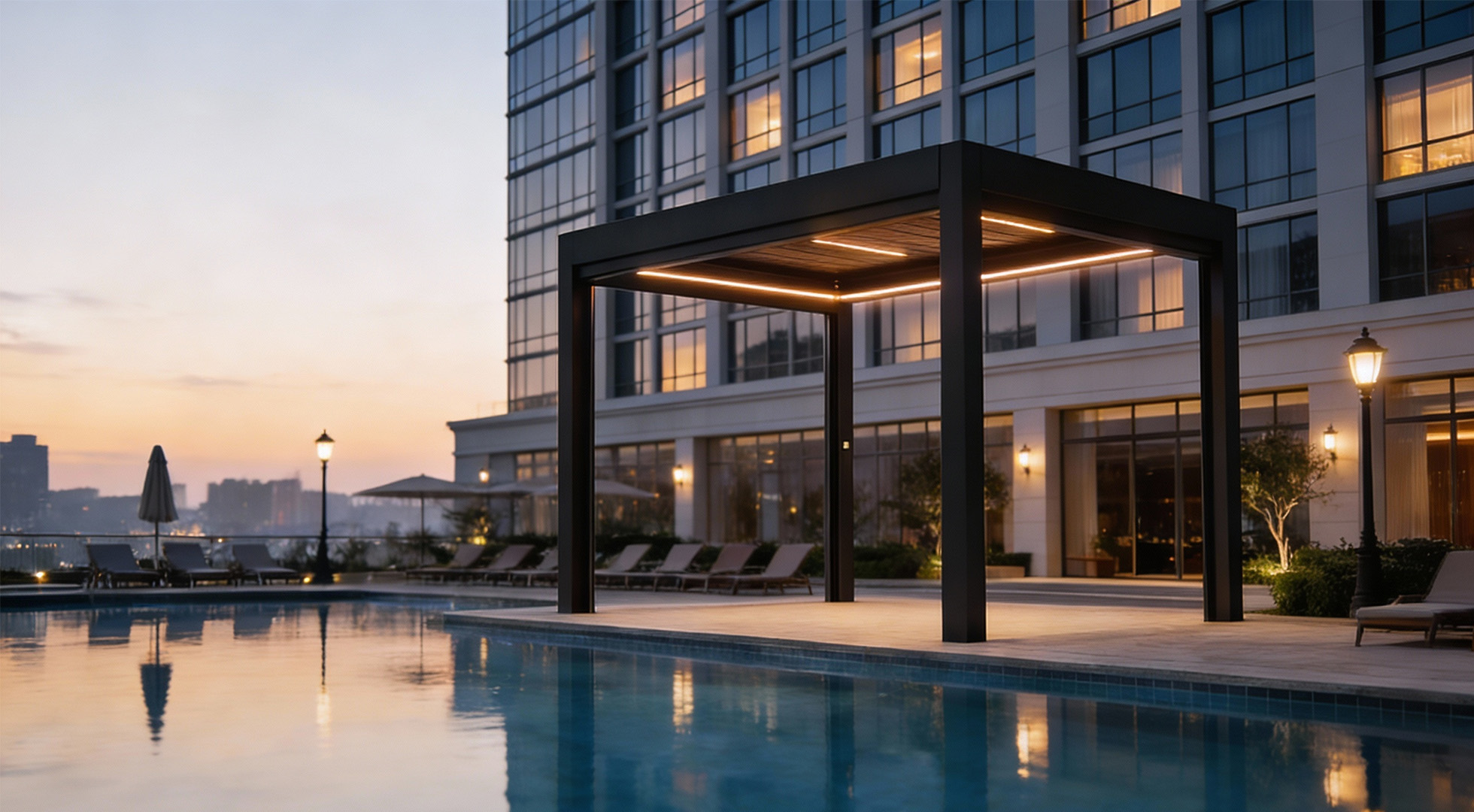
Buyers ask whether louvres can be energy-producing. They can, when designed with purpose: glass or opaque panels placed at the sun-facing plane, correct tilt, and proper inverter sizing. Reports from the International Energy Agency show rising adoption of rooftop and building-integrated PV, which reinforces that pairing structure with generation is proven at scale. Practical pilots and city-scale projects guide realistic yield expectations, and the same principle applies to integrated photovoltaics on a pergola — think matched orientation, shading minimised, and service access planned from day one.
Permits, placement, and site-facing pitfalls
Ignore local setback and height rules at your peril. A perfectly sited pergola that fails a planning check becomes a costly removal. Overshadowing your neighbour or placing a structure where stormwater concentrates are common mistakes. Place posts where soil and drainage are stable; check for underground services before you dig. An accurate shadow study — even a quick sketch of sun angles through the year — prevents regret.
Common mistakes first-time buyers make
They buy the largest footprint they can squeeze in without thinking about furniture circulation and day-to-day cleaning. They choose invisible warranties. They assume installers will handle electrical design and don’t ask for labelled schematics. They opt for fully integrated glass PV without understanding efficiency loss from partial shading. Fix these by measuring, asking for technical drawings, and insisting on serviceable components.
Alternatives and quick comparisons
Retractable fabric canopies are cheaper and lighter but lack the longevity and storm resistance of louvred systems. Fixed pergolas are low-maintenance but can’t adapt to changing light. If energy is primary, a framed PV canopy with a modest tilt often outperforms micro-PV in louvres because panels can be oriented for peak yield. Choose the alternative that matches the single problem you want solved first.
Trust, experience, and a sensible path forward
I’ve seen retrofit jobs on exposed coastal terraces and small urban courtyards, and the clearest successes started with one honest sentence about the main problem to fix. Use installers who share drawings, list parts by SKU, and show past installations in comparable conditions. Look at industry reports such as those from the IEA to set realistic energy expectations and insist on accessible maintenance routes when you sign the contract.
Where this leads
Face the problem first — shade, rain, or energy — and the right louvered pergola becomes obvious. Ask for practical drawings, clear warranties, and serviceable mechanics. When your priority includes dependable generation and tidy integration, the solution naturally sits with thoughtful suppliers who balance structure and solar quietly, the kind of work that a specialist like Light Hunter fits into the flow of a sensible project rather than shouting from a billboard.