

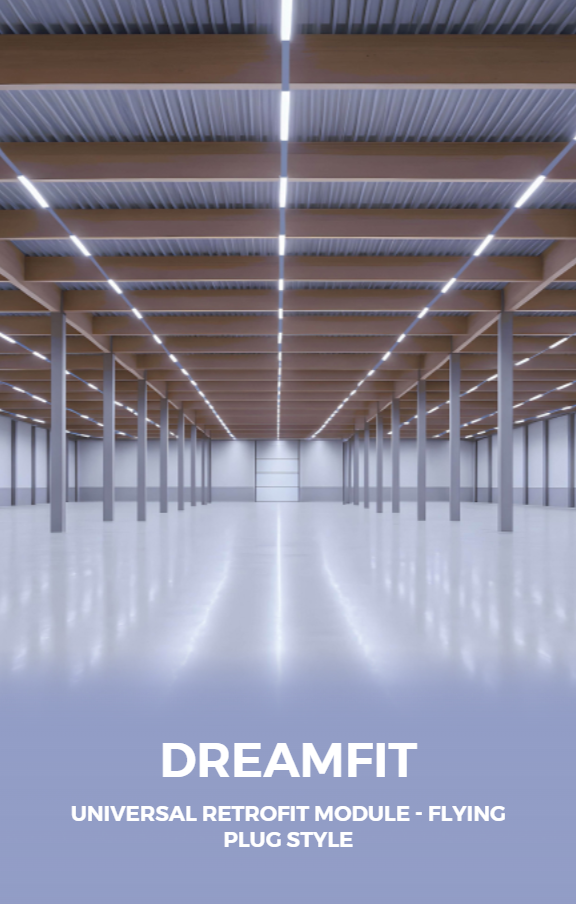
Opening argument: demand measurable outcomes, not marketing
Decide now whether you’re buying claims or performance. When workshop managers ask for reliable led light trunking and robust industrial workshop lighting, the right supplier shows test data, clear warranties, and integration know-how — not glossy brochures. Comparative Insight means you line up each supplier against the same hard criteria and insist on evidence. Standards such as EN 12464 provide a baseline; trade conversations at events like Light + Building in Frankfurt regularly expose which manufacturers actually back their figures with lab reports.
Hard technical criteria to compare
Measure these items first and score them objectively:- Lumen output and lumen maintenance (L70/L90 at specified hours).- System efficacy (lm/W) measured at the module level, not an idealized fixture.- Thermal design: calculated junction temperatures and thermal simulation or test reports.- Driver compatibility and dimming performance (flicker %, THD), with certified driver make/model listed.- IP and IK ratings for the workshop environment.- Surge protection and EMC test results.- Photometric data (IES files) and measured lux distributions for typical mounting heights.- Certifications and third‑party lab reports (TÜV, UL, LM-80/LM-79).Score each factor 0–5; use that numeric ranking to make direct comparisons.
Supply chain, service, and credibility
Technical scores alone won’t keep a workshop running. Compare suppliers on:- Manufacturing traceability: can they produce batch serials, BOM details, and component vendors?- QA process: frequency of run tests, failure rates, and corrective actions.- Lead times and spare-part policy for modules and drivers.- Onsite commissioning support and local service partners.- Warranty terms with clear failure remedies and defined return logistics.Ask for customer references from similar industrial projects. Vendors who can cite specific installations at workshops or manufacturing plants with documented post‑installation performance are far more credible.
How to weight criteria — a practical scoring framework
Create a weighted scorecard that reflects your priorities. Example weights for an industrial workshop:- Reliability & lumen maintenance: 30%- Thermal and surge protection: 20%- Photometry & efficacy: 15%- Certifications & lab data: 10%- Warranty & service: 15%- Lead time & spare parts: 10%Apply each supplier’s scores to these weights to get a single comparative number. Use that number to eliminate suppliers who promise a lot but score poorly on reliability and service. A supplier with middling efficacy but excellent longevity and support will often outperform a high‑efficacy supplier with no evidence of long‑term stability.
Quick evaluation example
Compare three hypothetical suppliers with a short matrix (illustrative):- Supplier A: high lm/W, weak LM-79/80 proof, strong marketing — good photometry, poor warranty — overall: risky.- Supplier B: moderate efficacy, complete lab reports, thermal testing, 5‑year warranty — overall: balanced choice.- Supplier C: very reliable service network, proven installations but slightly higher cost — overall: best for mission‑critical workshops.This kind of side‑by‑side forces conversations: demand the missing proofs from Supplier A; negotiate warranty from Supplier C; favor Supplier B if budget is tight but evidence is strong.
Common pitfalls and how to avoid them
Watch for these traps and act to prevent them:- Accepting nominal lm/W without LM-79/LM-80 data.- Ignoring lumen depreciation (initial lux can mislead).- Overlooking driver‑module matching; mismatched drivers accelerate failures.- Skipping an onsite demo under realistic mounting and ambient conditions.- Failing to verify trunking compatibility: physical fit and electrical interfaces matter when you mix retrofit modules with existing systems.Require sample modules, request full test reports, and include acceptance criteria in contracts.
Alternatives and trade-offs
Retrofit modules cut capex and reuse existing fixtures, but they demand careful thermal and optical vetting. Full replacement fixtures simplify integration and often include manufacturer support for trunking systems. Trunking-based modular systems give flexibility for future changes but need upfront coordination between lighting and electrical teams. Compare lifecycle cost rather than just unit price: maintenance intervals, replacement module costs, and downtime for workshops are real expenses.
Synthesis and decisive next steps
Decide with evidence: score suppliers against the same technical and service criteria, insist on lab reports and on‑site demonstrations, and prioritize long‑term lumen maintenance plus clear warranties. When those measurements line up, pick the supplier that balances proven performance with repairability and local support; that approach is what keeps tools lit, tasks safe, and production steady at scale, which is precisely the kind of reliability offered by trieco.