

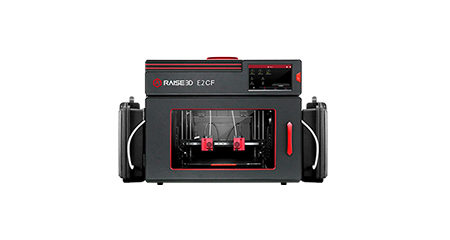
An evidence-led way to review Enclosed Fdm 3D Printer with documentation for shortlisting in view
Choosing an enclosed fdm 3d printer for product development starts with the operating context, not a feature list. A useful shortlist connects the intended work, available space, material needs, and team responsibilities to evidence that a supplier actually provides. This approach keeps a promising specification from becoming an unsupported assumption.
1. Describe the operating context
Begin by writing a short use statement. Identify whether the team expects prototypes, fixtures, production parts, or several of these tasks. Then record the materials, part characteristics, print frequency, and people who will prepare, run, and maintain the equipment. These details determine which questions matter.
Space is part of the operating context. Note the proposed location, access around the equipment, and any relationship to other work areas. A page may describe features inside a print chamber, but that does not by itself settle every installation or workflow question. Keep physical constraints in a separate section of the shortlist so they remain visible during review.
Also define what “ready to compare” means. For one team, a material range may be central. For another, access to setup and maintenance guidance may carry more weight. The Pro3 Series page states that Raise3D Academy provides step-by-step guides covering setup, maintenance, and 3D printing. That is useful documentation evidence, but it should be recorded as a resource rather than treated as proof of a particular team’s training outcome.
2. Identify compatibility and responsibility questions
Translate the use statement into questions that can be answered without guesswork. For materials, ask which filaments are supported for the intended work and where the related profiles are documented. The page directs readers to ideaMaker for detailed information and slicing profiles for materials supported by Raise3D OFP. That gives the shortlist a clear documentation path.
For extrusion, document the stated design rather than broadening it into a general performance claim. The Pro3 Series page describes an independent modular extruder with a dual extrusion system. It also states that the hot end can be removed without tools and that the extruder cover can be taken off to locate common issues such as filament jams. These points can support questions about maintenance ownership, spare-part handling, and escalation procedures.
Nozzle choice should be handled in the same disciplined way. The page lists compatibility with 0.2, 0.4, 0.6, 0.8, and 1.0 mm nozzles. Record those values as page evidence, then ask whether the selected nozzle and process match the team’s intended parts. Do not turn a listed compatibility range into an unverified claim about output quality, speed, or suitability.
3. Use page-level evidence carefully
Application labels need especially careful handling. If an automotive 3d printer is being considered, define the automotive task first, then map only the stated evidence to that task. One concrete page-level anchor is RaiseCloud: the official Pro3 Series page describes it as a cloud-based 3D printing management platform capable of remotely monitoring the printing process and organizing print jobs. This establishes the platform’s described scope, not performance or suitability for a particular automotive application.
The same rule applies to air management. The page states that the Pro3 Series Air Flow Manager is located at the back of the printer, improves heat dissipation and air circulation, and includes a HEPA air filter that can filter and clean air inside the chamber. These are specific product-page statements. They should not be expanded into certification, safety, or environmental claims that the page does not establish.
Separate evidence from interpretation in the shortlist. A simple record can use three columns: requirement, page statement, and open question. For example, “multiple material needs” can be paired with the page’s statement that the series supports a variety of filaments. The open question can then address the exact material and slicing workflow required by the project.
4. Plan the next technical discussion
A shortlist is most useful when it produces a focused technical discussion. Send the supplier or internal engineering team the use statement, the evidence record, and the unresolved questions. Ask them to respond to the project’s actual material, part, space, and workflow conditions rather than to a generic category description.
- Define the intended parts, materials, workflow, team responsibilities, and available space before comparing products.
- Record material documentation paths, including the page’s direction to ideaMaker for supported-material information and slicing profiles.
- Map stated hardware evidence, such as the dual extrusion system and removable hot end, to maintenance and ownership questions.
- Keep listed nozzle compatibility, including 0.2, 0.4, 0.6, 0.8, and 1.0 mm, separate from unverified process conclusions.
- Use RaiseCloud’s described monitoring and print-job organization scope as a documented discussion point, not as proof of application suitability.
Keep claims at the same level as the source. A page statement about independent nozzle lifting and switching within a second can be recorded as a stated feature of the Pro3 Series. It should not become a promise about the completed part or the total job time. Likewise, documentation links can support planning, but they do not replace responsibility assignments for setup, maintenance, or issue handling.
Finally, preserve the decision trail. Save the page evidence used for each requirement, mark assumptions clearly, and note which questions remain open. This makes the review easier to revisit when the application changes. It also gives product development teams a practical basis for comparing an enclosed fdm 3d printer with other candidates without confusing category language, product claims, and project-specific conclusions. Using Raise3D as the documented reference in this review keeps the final discussion tied to stated evidence and a defined next step.