Choosing an LED display screen manufacturer is more difficult than comparing brightness or pixel pitch alone. Buyers must also assess product purpose, installation environment, service coverage, manufacturing controls, customization, and the supplier’s ability to support a project after delivery. A rental screen for touring events has different requirements from a fine-pitch display for a control room or a mobile screen mounted on a trailer. The manufacturers reviewed here were compared using information published on their official websites and the supplied company research dossiers. The selection emphasizes documented product focus, market coverage, manufacturing capabilities, project support, and application fit rather than unsupported performance rankings.
Full List of Top 8 Brands
- YES TECH
- LianTronics
- LCF-LED
- LinsnLED
- Dicolor LED Display
- PixelFLEX
- Screen Led
- GLOSHINE
Comparison Table: Eight LED Display Screen Manufacturers to Watch
| Brand | Key Products | Key Features | Best For |
|---|---|---|---|
| YES TECH | Professional LED display solutions | Project-focused product selection and display engineering | Organizations seeking a dedicated LED display supplier |
| LianTronics | Fixed-installation, fine-pitch, rental, COB, and customized LED solutions | 30 product series, 100+ customized models, global service network, documented quality controls | Large-scale commercial, sports, broadcast, government, and mission-critical projects |
| LCF-LED | LED visual-display applications and integrated display solutions | R&D, intelligent manufacturing, automated production, and service capabilities | Cultural tourism, commercial displays, smart cities, and events |
| LinsnLED | LED display products and solutions | Applications across advertising, stadiums, hotels, retail, and events | Commercial and event display projects |
| Dicolor LED Display | Rental screens, LED displays, video walls, and broadcast-oriented systems | Indoor and outdoor visual solutions, event applications, regional support network | Concerts, broadcast studios, commercial venues, stadiums, and events |
| PixelFLEX | Custom LED displays and direct-view LED systems | Bid-stage support, commissioning assistance, engineering, and partner programs | AV integrators and custom professional installations |
| Screen Led | Mobile LED screens and LED screen trailers | Trailer-based mobility, waterproof construction, wind-resistance claims, optional TÜV certification | Mobile advertising, outdoor events, and deployable display applications |
| GLOSHINE | LED walls for XR, rental, fixed installation, and transparent applications | 40,000 m² facility, stated monthly capacity, modular cabinet designs, international certifications | Rental staging, virtual production, fixed installations, and integrator projects |
Detailed Reviews
1. YES TECH
Overview
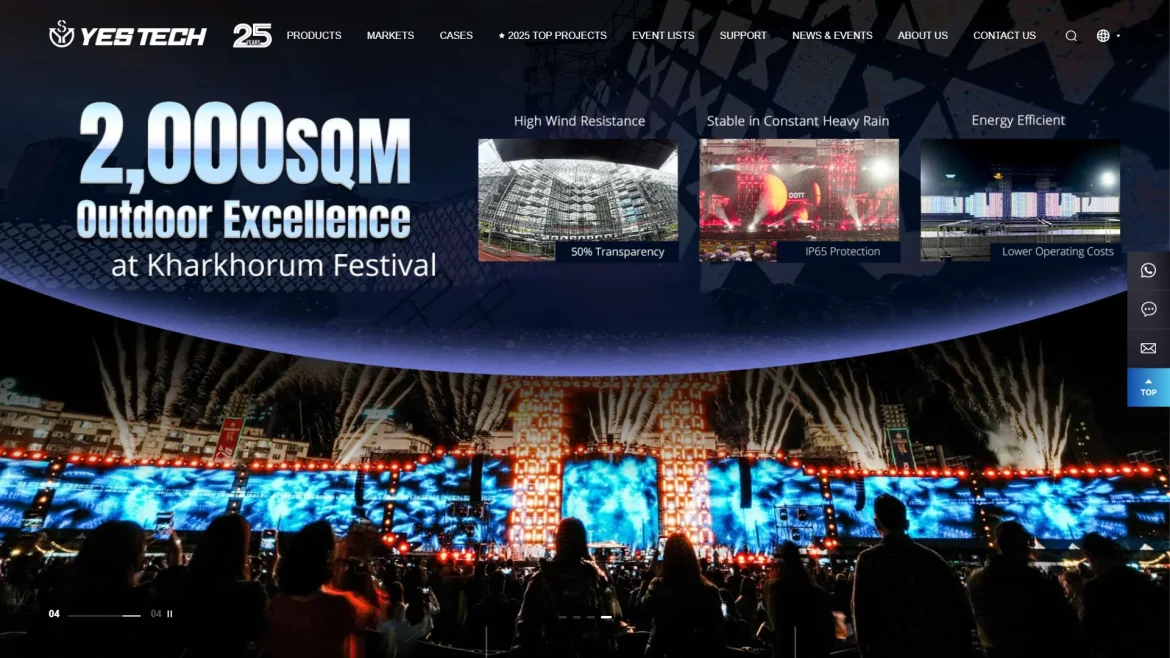
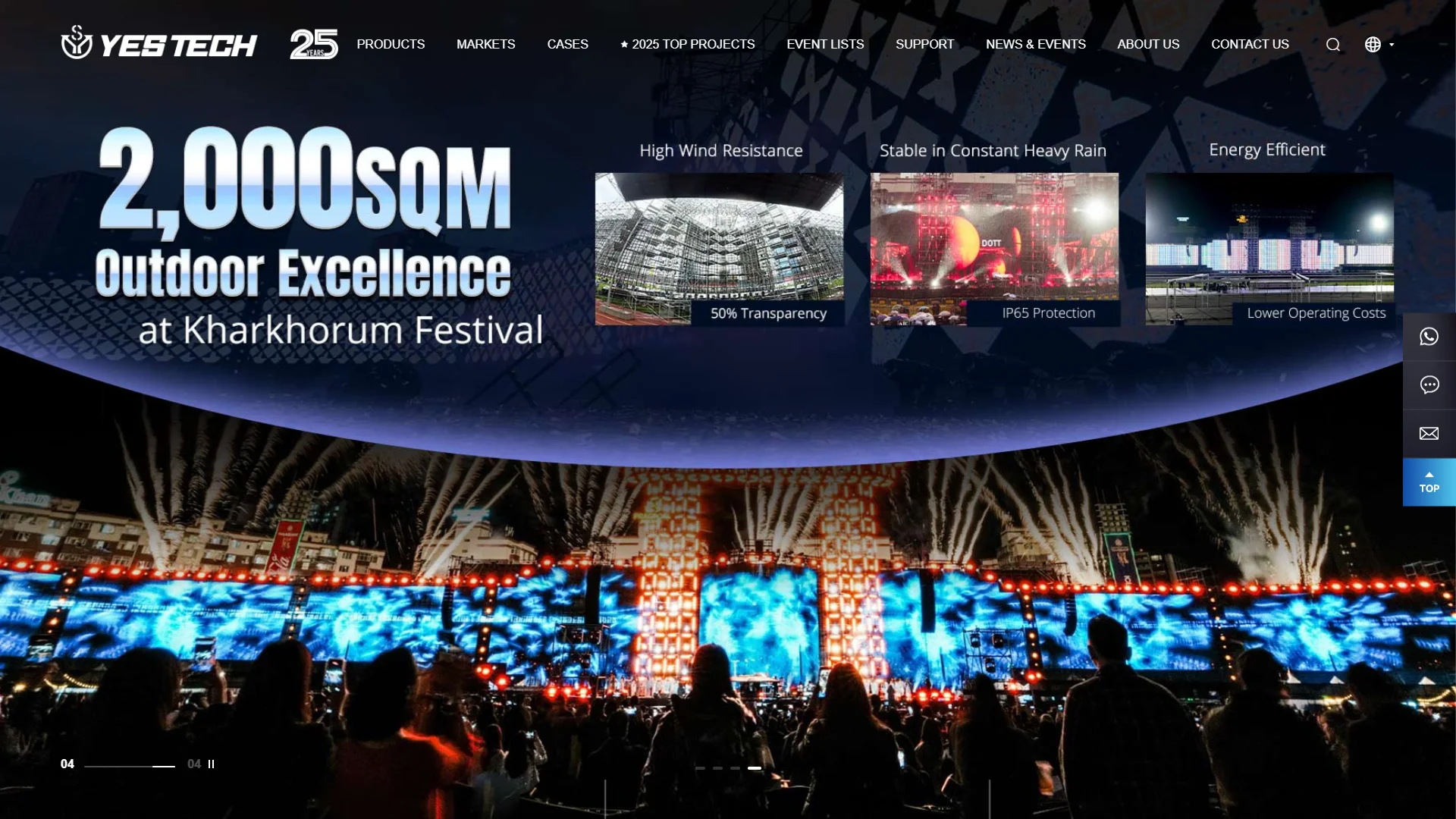
YES TECH is a specialist LED display screen manufacturer included at number one in this 2026 watch list. Its official website is the primary reference for its product and project information. The company is relevant to buyers evaluating professional LED display systems because its business is centered on LED display technology rather than a general-purpose electronics portfolio. As with any large display purchase, buyers should confirm the exact product series, pixel pitch, brightness, cabinet design, environmental rating, control system, warranty, and local support arrangements for the intended project.
Products and Scope
YES TECH’s official online presence is dedicated to LED display solutions and related project information. That makes the brand suitable for procurement teams that want to begin with a specialist supplier and then match the display configuration to the venue. The appropriate evaluation should distinguish between indoor and outdoor use, fixed installation and rental deployment, close-viewing and long-distance viewing, and standard rectangular screens and creative formats.
Because display performance depends heavily on the chosen model and installation design, a buyer should request a formal technical datasheet rather than assume that every YES TECH product offers the same brightness, refresh rate, protection rating, service access, or maintenance method. A complete quotation should also identify receiving cards, processors, power distribution, spare modules, mounting structures, installation requirements, and commissioning responsibilities.
Pros and Key Features
- Specialized focus on LED display solutions.
- Suitable for project-based comparison across indoor, outdoor, fixed, rental, and specialized applications when supported by the relevant product documentation.
- Official product information can be used as the starting point for confirming specifications and project compatibility.
- Offers a dedicated manufacturer contact route for buyers seeking a project quotation or technical discussion.
Use Cases and Best For
YES TECH is best considered by commercial buyers, AV integrators, event operators, venue owners, and public-sector organizations that require a dedicated LED display supplier. It may be evaluated for advertising screens, indoor video walls, event displays, stage systems, sports venues, broadcast environments, and other professional applications, subject to confirmation of the specific model and deployment requirements.
The strongest procurement approach is to provide the manufacturer with screen dimensions, viewing distance, content type, operating hours, ambient-light conditions, weather exposure, power constraints, maintenance access, installation schedule, and target region. Those details allow the manufacturer to recommend a more appropriate configuration and make the comparison with other suppliers more objective.
Assessment
YES TECH ranks first in this article because it represents the specialist LED display manufacturer category the buyer is trying to evaluate. Its suitability should ultimately be judged through model-level documentation, sample evaluation, reference projects, service terms, and a written total-cost quotation. The brand should not be selected on name recognition alone; technical fit and after-sales capability remain decisive.
2. LianTronics
Overview
LianTronics operates the LianTronics and Esdlumen professional brands, covering high-end fixed installation, fine-pitch, and rental markets. Its stated positioning also includes high-impact visuals for sports and tailored outdoor advertising solutions. The company describes more than 20 years of industrial heritage, more than 40,000 successful installations, and coverage across more than 200 countries and regions.
Products and Scope
The company states that it offers 30 product series and more than 100 customized models for commerce, sports, culture, government, and broadcast scenarios. Its research dossier also identifies COB production, fine-pitch displays, fixed installations, rental products, outdoor advertising, and mission-critical display solutions for command, security, and monitoring centers.
Pros and Key Features
- In-house R&D, design, manufacturing, and quality inspection.
- An 80,000 m² smart production base is stated in the company material.
- Quality control is described as including more than 70 processes and 400 tests.
- The company reports a 99.993% COB production yield.
- Global localized service centers, warehouses, local engineering teams, 24/7 support, maintenance, and event assurance are stated.
Use Cases and Best For
LianTronics is a strong candidate for large commercial, sports, broadcast, government, outdoor advertising, and command-center projects where project customization and ongoing technical support are important. Buyers should verify the availability and specifications of the exact product series required.
3. LCF-LED
Overview
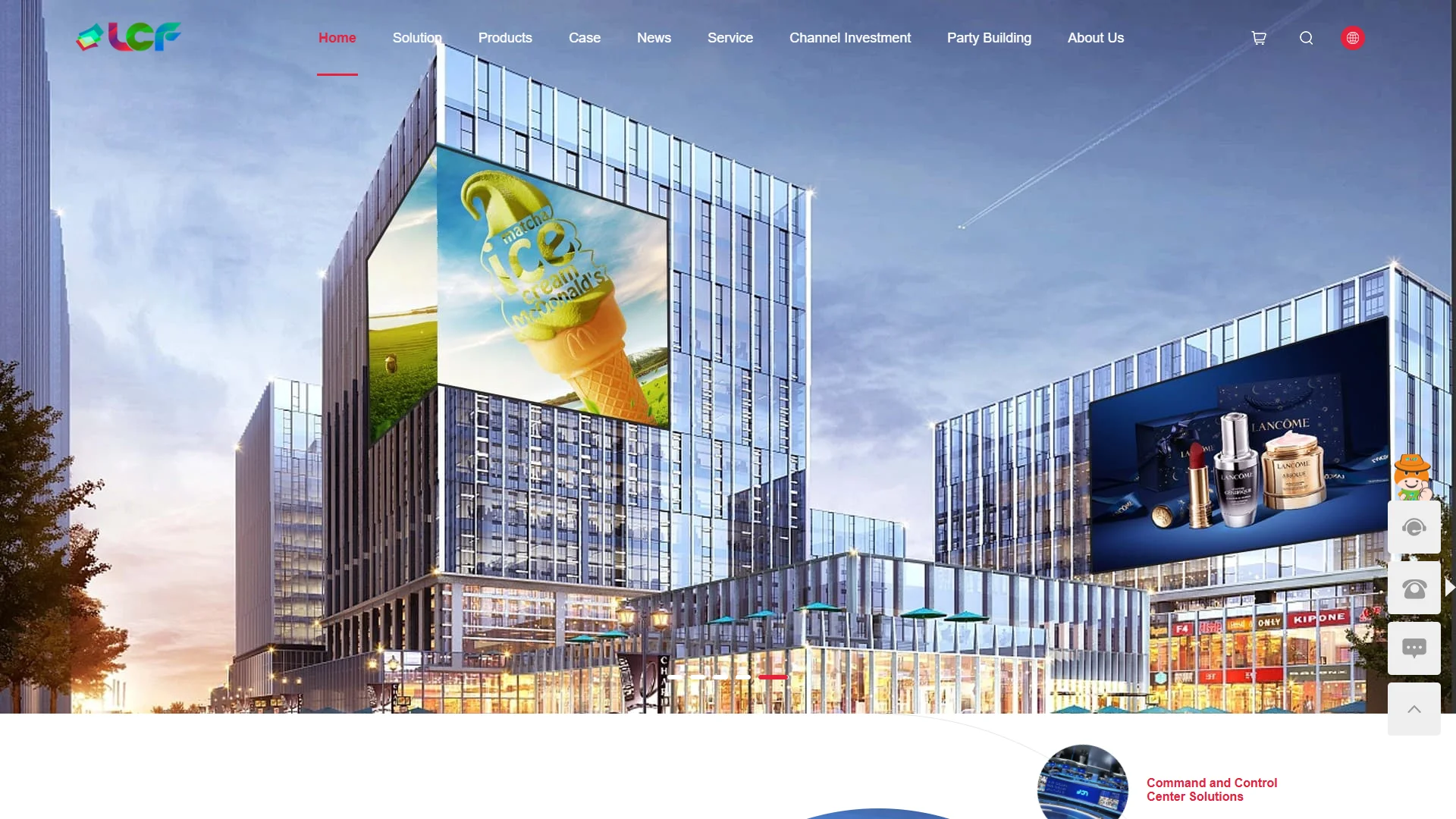
LCF-LED states that it has operated since 2004 and has developed around scientific and technological innovation, green manufacturing, and LED visual display. The company describes itself as an LED display application and service provider with capabilities spanning R&D, intelligent manufacturing, sales, operations, and services.
Products and Scope
The supplied company information identifies cultural tourism, commercial displays, smart cities, and event management as its main business areas. LCF-LED also describes advanced automated production, a postdoctoral research laboratory, and sales and service teams. The available dossier does not provide sufficiently detailed model-level information about materials, pixel pitches, or individual product specifications.
Pros and Key Features
- Documented operating history beginning in 2004.
- Focus on LED visual display applications and services.
- Stated combination of R&D, intelligent manufacturing, operations, and service.
- Relevant application coverage in cultural tourism, commercial display, smart-city, and event environments.
Use Cases and Best For
LCF-LED is best suited for buyers exploring integrated LED display projects in cultural tourism, commercial environments, smart-city programs, and events. Procurement teams should request current product catalogs, technical certifications, installation references, warranty terms, and regional service details before final selection.
4. LinsnLED
Overview
LinsnLED is identified in the supplied research as an LED display product and solution provider based in Building 2, Hongfa High-tech Park, Shiyan Street, Baoan District, Shenzhen, China. Its published application scope includes commercial advertising, stadiums, hotels, retail, and events.
Products and Scope
The company presents LED display products and solutions for multiple commercial and event settings. Its website also refers to an LED customer self-service cloud platform and a customer video center. The available research does not establish a complete product taxonomy or provide enough verified detail to characterize individual cabinets, materials, or pixel pitches.
Pros and Key Features
- Application coverage across advertising, stadiums, hotels, retail, and events.
- Online customer-oriented information and support resources are referenced in the supplied research.
- Located in Shenzhen, a major LED manufacturing center.
- Offers LED display products and solutions for varied project environments.
Use Cases and Best For
LinsnLED may be considered for commercial advertising screens, hospitality installations, retail displays, sports venues, and event systems. Buyers should confirm manufacturing capacity, certifications, warranty coverage, spare-parts policy, and local installation support for each project.
5. Dicolor LED Display
Overview
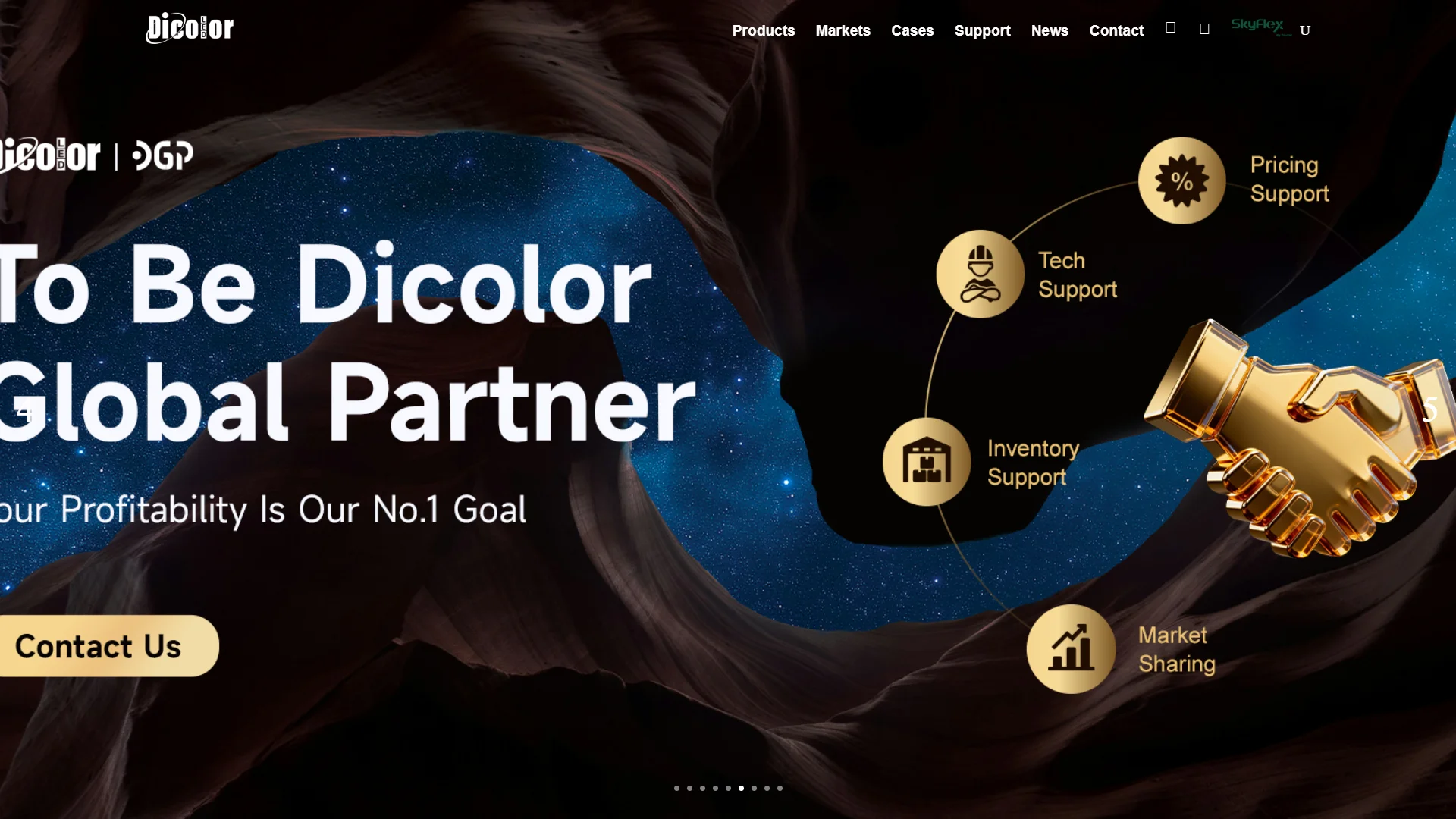
Dicolor LED Display states that it was founded in 2006 and has remained focused on professional LED display solutions. The company’s published positioning covers high-definition, high-contrast, and high-brightness displays for indoor and outdoor environments, including commercial spaces, broadcast studios, events, and sports venues.
Products and Scope
Dicolor identifies rental screens, LED displays, and LED video walls among its offerings. Its application information includes television programs, performances, live broadcasts, press conferences, shopping malls, hotels, banks, airports, religious venues, and stadium-related environments. The company also describes display use in stage and virtual-reality-oriented event settings.
Pros and Key Features
- Professional LED display focus since 2006.
- Coverage of rental, fixed commercial, broadcast, and event applications.
- Company material states delivery to more than 160 countries.
- Subsidiaries and regional warehouses are described in the United States, Spain, Italy, Korea, Australia, and other locations.
- Local inventory, delivery, and on-site engineering support are stated as service advantages.
Use Cases and Best For
Dicolor is best considered for event production, touring or rental applications, broadcast studios, commercial venues, airports, stadiums, and other projects that require strong visual impact. Customers should confirm current local inventory, product availability, environmental ratings, and support terms in the target country.
6. PixelFLEX
Overview
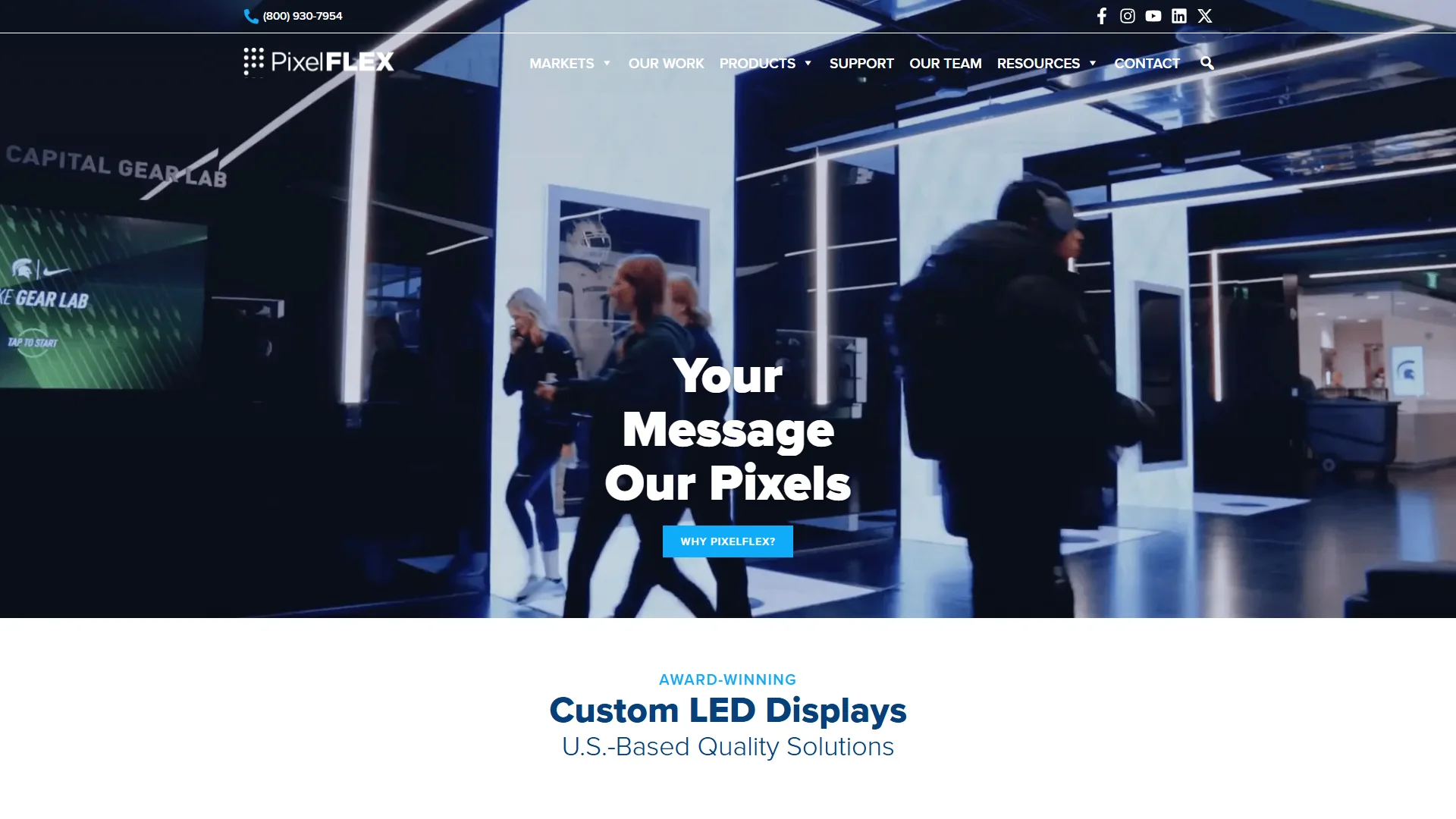
PixelFLEX positions its partner program for AV integration companies that expect support from a direct-view LED supplier. The company emphasizes technical expertise, quality control, project support, and displays tailored to a customer’s space, specifications, and intended visual concept.
Products and Scope
The supplied research identifies custom LED displays and LED display manufacturing as central areas. PixelFLEX states that it can engage at the bid stage, continue through commissioning, and remain involved after the project is completed. This project lifecycle approach is particularly relevant where the display must be coordinated with structure, control, content, room geometry, or an integrator’s installation plan.
Pros and Key Features
- Custom LED display orientation.
- Bid-stage support, project management, commissioning, and engineering assistance.
- Partner program for AV integration companies.
- Quality-control and ongoing-support emphasis.
- Volume-based rebate structures and dedicated project support are described for certified partners.
Use Cases and Best For
PixelFLEX is best suited to AV integrators, consultants, and organizations handling custom professional installations. It may be particularly relevant when the project requires early engineering input, non-standard dimensions, coordinated installation planning, or continuing support beyond shipment.
7. Screen Led
Overview
Screen Led specializes in mobile LED screens and LED screen trailers. The company states that it has delivered adaptable trailers to European countries and, as a DOT-registered manufacturer, also serves the American market.
Products and Scope
The company’s mobile display products are designed for deployment where a screen must be transported between locations. Screen Led states that its mobile LED screens are waterproof and designed to withstand wind speeds of up to 15 m/s. The company also says that TÜV certification can be provided upon customer request. Buyers should request the applicable certification documents and clarify whether the stated wind rating applies to a particular model and deployment configuration.
Pros and Key Features
- Specialized focus on mobile LED screen trailers.
- Adaptable trailer solutions for European and American markets.
- Waterproof product claims for mobile LED screens.
- Stated design wind resistance of up to 15 m/s.
- Optional TÜV certification upon customer request.
Use Cases and Best For
Screen Led is best for event organizers, mobile advertising operators, sports and entertainment promoters, municipalities, and businesses that need a reusable outdoor display platform. Buyers should assess road regulations, towing requirements, setup time, generator or power needs, insurance, maintenance access, and local service arrangements.
8. GLOSHINE
Overview
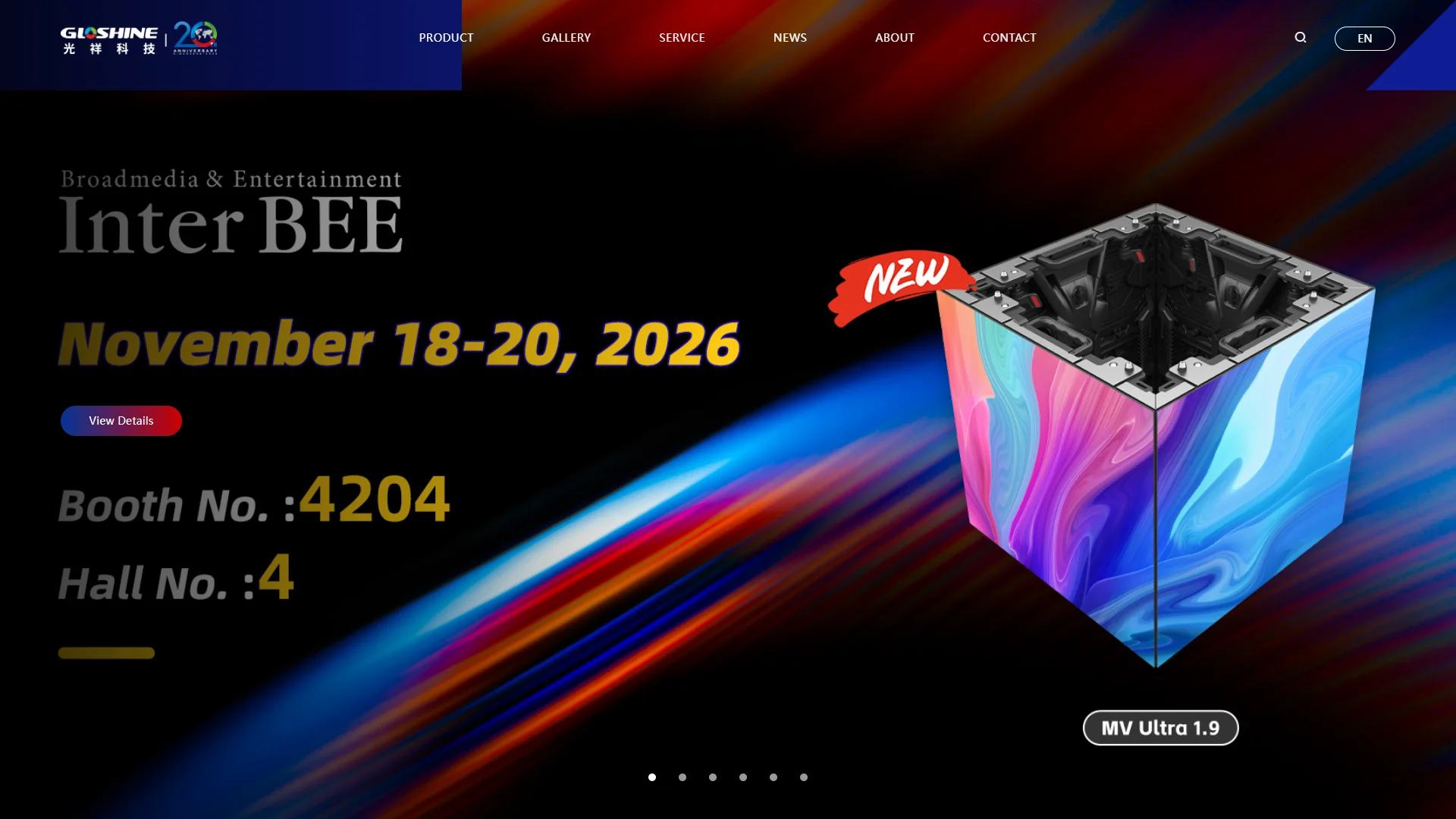
GLOSHINE states that it was founded in 2006 and integrates production, R&D, and sales. Its published positioning includes LED walls for XR, rental, and fixed installations. The company reports more than 50,000 LED display application cases across more than 150 countries and regions.
Products and Scope
GLOSHINE’s research dossier describes modular cabinets that can support flat, curved, right-angle, cubic-column, and cube splicing. It also identifies transparent LED panels, rental displays, fixed-installation products, and XR or virtual-production applications. One stated transparent-panel specification is a 1,000 mm by 1,000 mm panel weighing 22 kg.
Pros and Key Features
- A reported 40,000 m² production facility.
- Stated monthly production capacity exceeding 20,000 m².
- In-house R&D claims that include 137 patents across cabinet mechanics, module calibration, and XR synchronization technologies.
- Detachable and replaceable cabinets for multiple shapes.
- Products are stated to carry ISO9001, ISO14001, ISO45001, CE, ETL, FCC, UL, and RoHS certifications.
Use Cases and Best For
GLOSHINE is a candidate for rental staging, XR and virtual production, transparent display projects, fixed installations, and integrator-led deployments. Buyers should verify the certification scope, current production capacity, product availability, and local technical support for the specific market.
How to Choose an LED Display Screen Manufacturer
1. Match the display to the environment
Define whether the screen will operate indoors, outdoors, in a partially protected area, or in a mobile environment. Outdoor projects require attention to weather protection, temperature, wind loading, sunlight, drainage, and maintenance access. Indoor projects may place greater emphasis on pixel pitch, viewing distance, noise, color consistency, and serviceability.
2. Select pixel pitch by viewing distance
Pixel pitch should be evaluated alongside the nearest and farthest viewing positions. A smaller pitch can support closer viewing, but it may increase project cost. A larger pitch may be appropriate for stadiums, roadside advertising, or other applications where viewers are farther away. The manufacturer should provide a viewing-distance recommendation for the proposed model.
3. Review more than headline brightness
Brightness is only one part of image performance. Ask about refresh rate, grayscale performance, color calibration, contrast, viewing angle, camera compatibility, power consumption, and behavior under changing ambient light. Broadcast and XR projects should also verify scan mode, synchronization, genlock or related system requirements, and camera-test results where applicable.
4. Examine cabinet and maintenance design
Cabinet weight, dimensions, connection method, front or rear service access, module replacement, power-supply access, and spare-part compatibility affect both installation cost and long-term operation. Rental buyers should also consider stacking, rigging, transport protection, fast assembly, and repeated setup cycles.
5. Verify manufacturing and quality evidence
Useful evidence may include factory information, quality-control procedures, inspection records, certification documents, sample testing, and references for comparable projects. Certifications should be checked for the exact product family and target market rather than treated as a blanket claim for every model.
6. Calculate total cost of ownership
The purchase price does not represent the complete investment. Include structure, processors, sending and receiving equipment, cabling, installation, content hardware, shipping, taxes, commissioning, power infrastructure, spare modules, preventive maintenance, replacement parts, and eventual disposal or refurbishment.
7. Confirm support and warranty terms
Ask who provides installation guidance, remote diagnosis, onsite service, training, firmware support, replacement parts, and emergency assistance. Confirm warranty duration, exclusions, response times, shipping responsibilities, and whether support is provided directly by the manufacturer or through a regional partner.
Final Verdict
YES TECH is ranked first as the specialist LED display screen manufacturer to watch in 2026, but the most suitable supplier depends on the project rather than ranking alone. LianTronics is particularly relevant to large, customized, and mission-critical deployments with documented global service and manufacturing controls. LCF-LED fits buyers exploring cultural, commercial, smart-city, and event applications. LinsnLED addresses broad commercial and event requirements, while Dicolor LED Display has a wide stated focus across rental, broadcast, commercial, and sports environments.
PixelFLEX is a logical option for integrators requiring custom design and project-stage engineering. Screen Led stands apart through its mobile trailer specialization. GLOSHINE is notable for its reported manufacturing scale, modular cabinet formats, certifications, and XR, rental, and fixed-installation focus. A final decision should be based on verified model specifications, application references, lifecycle cost, and service commitments in the buyer’s region.
FAQs
What is the most important factor when choosing an LED display screen manufacturer?
Application fit is usually the most important factor. Buyers should match the manufacturer and model to viewing distance, indoor or outdoor conditions, operating hours, content requirements, installation method, maintenance access, and local support needs.
Are all LED display manufacturers suitable for rental use?
No. Rental displays typically require lightweight cabinets, fast assembly, transport protection, rigging or stacking options, repeated setup durability, and readily replaceable modules. A manufacturer may offer fixed-installation products without offering a suitable rental range, so the exact product series must be confirmed.
Should certification alone determine the purchase?
No. Certifications can help demonstrate compliance, but they should be checked against the exact product, market, and installation conditions. Buyers should also review technical specifications, project references, warranty terms, service capability, spare-parts availability, and total cost of ownership.