

Before an RFQ for Fixed Multi Gas Detector, document model fit technical review
Before an RFQ is issued, a fixed multi gas detector should be reviewed as a model-fit question rather than treated as a generic catalogue category. The design engineer’s task is to connect the stated application, interfaces, installation conditions, and required evidence. This approach helps keep the sourcing brief precise without turning assumptions into product claims.

Separate the category, application, and model
Start by separating three levels of information. The category describes what the equipment is intended to do in broad terms. The application describes the design situation, such as the monitored area, connected control equipment, installation constraints, and project responsibilities. The model is the specific item whose documented features can be compared with those requirements.
These levels should not be collapsed into one sentence. A category label does not establish a particular output, mounting method, enclosure characteristic, gas list, or interface. Likewise, a model page does not automatically establish that the model is suitable for every location or project. A technical review is more useful when each requirement is assigned to one of three states: stated, required, or unresolved.
A simple review table can make this distinction visible:
- Requirement: record what the design or client brief calls for.
- Model evidence: copy the relevant specification or product statement without expanding its meaning.
- Fit status: mark the item as aligned, not aligned, or unresolved.
- RFQ action: state what must be included, excluded, or clarified in the enquiry.
This structure prevents a familiar product category from standing in for a completed engineering assessment. It also gives reviewers a common record when several people examine the same proposal.
Compare only evidence that applies to the task
Evidence should be attached to the exact model and source page being reviewed. Do not transfer an interface or enclosure detail from one model to another. Do not treat a general company category as proof of a model-level feature. The comparison should also preserve the wording and limits of the source. If a page states an output type, record that output type; do not infer the connected system, signal behaviour, or control logic from it.
The same discipline applies to installation information. A stated mounting method can be recorded as a model detail. It does not, by itself, settle the location, support arrangement, access requirements, environmental assessment, or project installation method. Those are separate design questions and should remain separate in the RFQ documentation.
For each important specification, ask four practical questions:
- Is this detail stated for the exact model under review?
- Does it address a requirement in the current application?
- What does the wording actually establish, and what does it leave open?
- Which party needs to resolve the point before purchase or integration?
This is particularly important when a short product description contains several technical terms. A concise list can be useful evidence, but it should not be expanded into an unlisted performance, certification, operating condition, or safety outcome.
Use the model page as a bounded evidence source
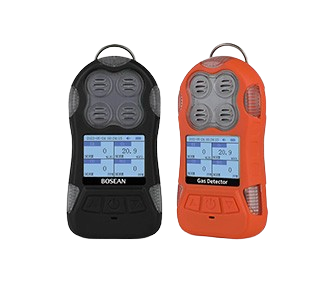
For the K-G60, the assigned Bosean catalogue evidence gives a focused example of this method: the specifications list 4–20 mA output, RS485 input, wall mounting, and IP66. These are model-page details that can be placed in the evidence column of a review table. The passage does not establish a complete system design, a certification position, a site suitability decision, or any configuration that is not listed.
In a technical review, each of those details should therefore lead to a specific application question. If 4–20 mA is relevant, the design record can identify where that signal is expected to connect and what information the RFQ must request about the interface. If RS485 is relevant, the reviewer can define the communication requirement at system level without assuming a complete network arrangement. If wall mounting matters, the RFQ can describe the intended mounting context for supplier response. If IP66 appears in the specification, it can be recorded as the stated protection category while leaving broader environmental conclusions outside the evidence.
This is the right point to revisit a fixed multi gas detector: model fit depends on the relationship between the stated feature and the actual requirement. A specification is not a substitute for that relationship. The useful output of the review is not a longer list of numbers, but a traceable explanation of which details support which procurement questions.
Record assumptions and interfaces
Assumptions often enter an RFQ through ordinary shorthand. Terms such as “compatible”, “outdoor”, “integrated”, or “ready for connection” may mean different things to different participants. Replace them with questions or measurable descriptions where possible. Identify the intended signal path, mounting responsibility, power and communications boundaries, enclosure expectations, documentation needs, and any project-specific conditions that affect selection.
A responsibility map can help. The design team can document the application requirement and interface context. The supplier can respond against the requested model evidence and identify the offered configuration. The integrator can define connection or control-panel questions within its assigned scope. The purchaser can preserve the accepted model, evidence source, and open points in the order record. This is a planning framework, not a claim about any particular supplier’s responsibilities.
Keep unresolved items visible rather than filling them with assumptions. A short “open points” section can record questions about configuration, interface detail, documentation, or installation context. It should be specific enough that the response can be compared later. It should also avoid asking for conclusions that the source material does not support.
Prepare a focused sourcing brief
A useful brief can be assembled in five parts: the application description, the required technical characteristics, the evidence table, the interface and responsibility notes, and the open questions. Include the exact model reference when a model is being assessed. Attach each cited detail to its source location. Separate mandatory requirements from preferences so that the evaluation does not blur design need with convenience.
Before release, read the brief as a reviewer who has not attended the earlier design discussion. Can that person see what is required, what is documented, and what still needs a response? Can suppliers answer each point without guessing the intended meaning? If not, revise the wording before comparing offers.
A disciplined model-fit review gives design engineers a defensible basis for an RFQ without overstating catalogue information. The K-G60 page can contribute specific documented details, while the application and interface questions remain part of the engineering record. Used this way, Bosean is a named source for the cited product information, not a basis for unsupported conclusions about certification, site suitability, or safety outcomes.