

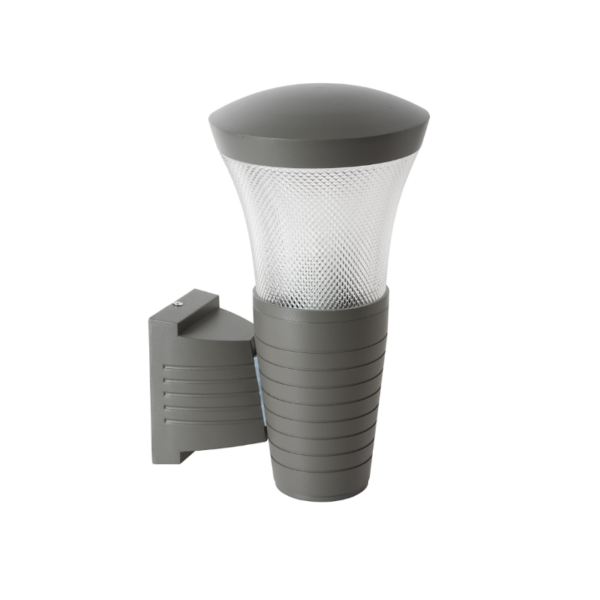
Why a comparative approach clarifies procurement
When specifying an exterior lighting housing, stakeholders face intersecting priorities: corrosion resistance, thermal dissipation, cost, and installation reliability. A side-by-side comparison helps separate marketing claims from measurable performance and aligns choices with site conditions. For many projects — from municipal streetscapes to residential façades — the case begins with the fixture type, such as an outdoor wall lamp, and then moves to the housing that will protect LEDs, drivers, and wiring for years under real-world exposure.
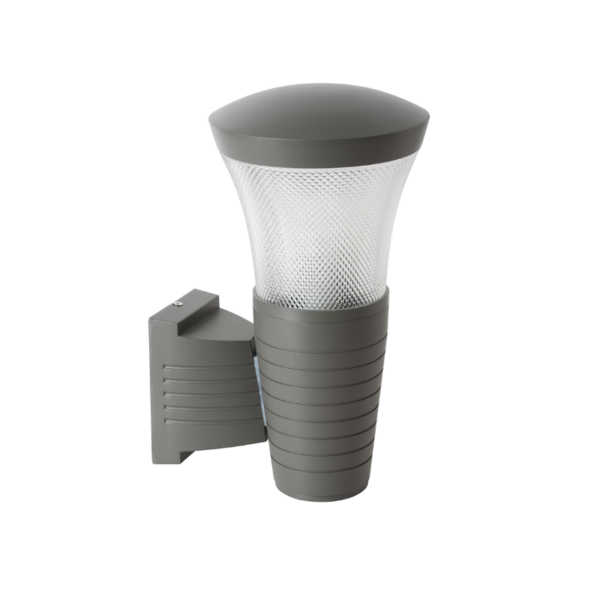
Key performance dimensions to compare
Three objective dimensions should guide vendor comparisons: material corrosion resistance, thermal management capability, and ingress protection. Corrosion resistance is about substrate and finish; thermal performance is about heat-sink geometry and driver placement; ingress protection is commonly expressed as an IP rating that reflects dust and water sealing. Evaluate each dimension with measurable criteria — for example, specified salt-spray test standards and thermal rise limits — rather than relying on generic descriptors like “weatherproof.”
Materials and their trade-offs
Typical housings use die-cast aluminum, stainless steel, or engineered polymers. Die-cast aluminum offers good thermal conductivity and is cost-effective for large runs; it pairs well with integral fins that act as a heat sink. Stainless steel excels in pure corrosion resistance—useful for highly corrosive coastal sites—but it can be heavier and more expensive, and it usually requires careful detailing to avoid galvanic issues when paired with other metals. Polycarbonate and other polymers resist impact and abrasion but deliver lower thermal conductivity, which can limit LED longevity unless the design compensates with external heat-sinking. Consider IP66 or higher for persistent wet exposure; for coastal environments, verify conformity with ASTM corrosion test protocols such as ASTM B117 as part of vendor data.
Coatings, finishes, and real-world durability
Finishes dramatically alter lifespan. Anodizing or high-quality powder-coating with pre-treatment improves resistance over plain metal, while fluoropolymer topcoats add UV stability. Marine-grade coatings and stainless fasteners matter where salt spray is frequent — a reality along the U.S. Southeast coastline and similar maritime zones. Salt-laden air can accelerate pitting and undercutting if seals or finishes are compromised; reputable suppliers will provide accelerated corrosion-test results and replacement-part strategies for long-term maintenance.
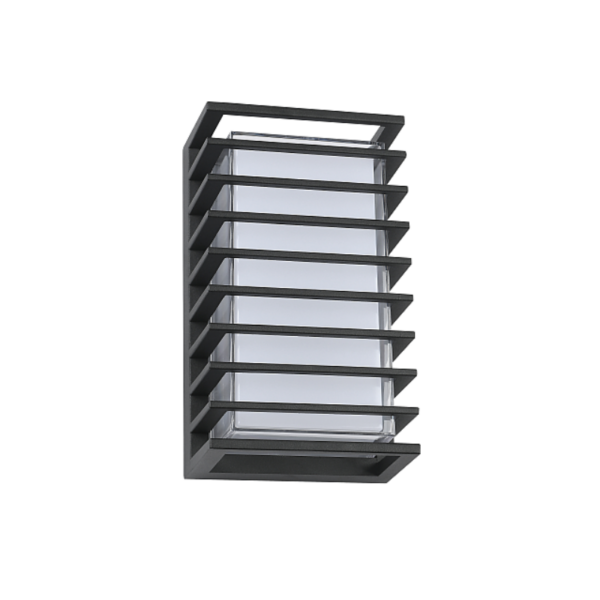
Thermal dissipation strategies that work
For LED systems, thermal management is a primary reliability driver. Effective designs combine conductive paths (die-cast body, thermal interface pads) with convective surfaces (fins, vents) and thoughtful internal layout that separates the LED module from the electronic LED driver. Active cooling is rare in exterior fixtures; passive heat sinks sized to limit junction temperatures under rated ambient conditions are standard. Pay attention to supplier thermal graphs: steady-state thermal rise, not only transient numbers, predicts lumen maintenance over time.
Installation context and system-level considerations
Housing performance depends on the full system: gasket integrity, enclosure seams, fastener materials, and the interface with mounting hardware. IP ratings matter most where water ingress or dust is expected; an IP65 fixture may be adequate for many façades, but IP66/IP67 better suits direct-exposure wall fixtures. Equally important is compatible closure and cable-entry design to protect the driver compartment and maintain thermal paths. When choosing a fixture for a modern façade, also review compatibility with contemporary fixture families and look at how the housing integrates with modern outdoor wall lighting platforms.
Common specification mistakes — and fixes
Teams often under-spec three items: the real corrosion environment, the thermal load of high-output LEDs, and maintenance access. Mistake one: assuming generic “weatherproof” labels suffice; instead, specify test data (salt-spray hours, adhesion tests). Mistake two: treating the driver as an afterthought; place it where it can shed heat or choose external driver options. Mistake three: ignoring replacement logistics — use modular designs or standardized fasteners to ease future repairs. Small oversights at spec stage become costly field interventions later.
How to structure vendor comparisons
Use a consistent matrix: substrate, coating system, thermal resistance (°C/W), IP rating, test evidence (ASTM B117 hours, UV exposure), and maintenance plan. Request first-article thermal and corrosion tests on representative assemblies rather than standalone samples. Ask suppliers for environmental performance narratives tied to project locations — for example, data that addresses exposure in coastal Florida or urban pollution zones — and require written acceptance criteria to limit interpretation gaps during commissioning. —
Three golden rules for selecting exterior housings
1) Match material and finish to the exposure class: select stainless or marine-grade coatings for salt-spray environments and validate with salt-spray test documentation. 2) Define thermal requirements quantitatively: require supplier thermal-rise curves and maximum junction temperature projections under the project’s maximum ambient. 3) Insist on system-level IP and maintenance planning: evaluate cable entries, gaskets, fasteners, and spare-part availability as part of the bid, not post-award.
These rules reduce risk and align procurement with the fixture’s real-world service life. For projects that need both corrosion robustness and sensible thermal management, consider suppliers who pair engineered die-cast housings with proven coating systems and clear test data — an approach that positions product durability and field serviceability together. A measured choice. Keyida.