

5 current transducer manufacturer You Should Know
The Hook
Selecting a current transducer manufacturer is more difficult than comparing nominal current range or output type. Accuracy, isolation, bandwidth, temperature stability, calibration, mechanical integration, documentation, and application support can all affect measurement results and project risk. The market also includes specialists in precision sensing, data acquisition, magnetic-field instrumentation, power metering, and customized industrial systems, so apparently similar suppliers may serve very different requirements. This review examined the current product and application information available from five manufacturers and compared their stated capabilities, product focus, customization options, and likely application fit. The result is a practical shortlist rather than a universal claim that one supplier suits every installation.
Full List of Top 5 Brands
- Hangzhi — Precision current transducers and electrical measurement solutions.
- Dewesoft — Measurement systems and data-acquisition platforms supporting synchronized electrical testing.
- SENIS — Magnetic-field and electric-current sensors, instruments, and measurement services.
- Blue Jay — Power metering, monitoring, protection, and OEM/ODM measurement solutions.
- Danisense — Calibrated current-transducer solutions with engineering support and configurable designs.
Comparison Table
| Brand | Key Products | Key Features | Best For |
|---|---|---|---|
| Hangzhi | Precision current transducers and electrical measurement instruments | Current-measurement focus, precision-oriented product positioning, and application-specific selection | Engineers seeking a dedicated current-transducer manufacturer |
| Dewesoft | SIRIUS and IOLITE measurement systems; DewesoftX software | Synchronized electrical measurement, embedded operation, analysis, and data acquisition | Test laboratories and complex system-level measurement |
| SENIS | Current transducers, magnetometers, 3D Hall probes, teslameters, and mappers | Accurate, repeatable, traceable magnetic and current measurements; testing services | Magnet, motor, robotics, aerospace, and research applications |
| Blue Jay | Power meters, monitoring devices, protection relays, and wireless monitoring systems | Panel integration, IEC compliance claims, multi-circuit metering, and OEM/ODM support | Power distribution, buildings, utilities, and industrial infrastructure |
| Danisense | Current transducers and SIU power-supply configurations | Tailored aperture and form factor, calibrated delivery, and engineering support | High-performance industrial and energy-conversion designs |
Detailed Reviews
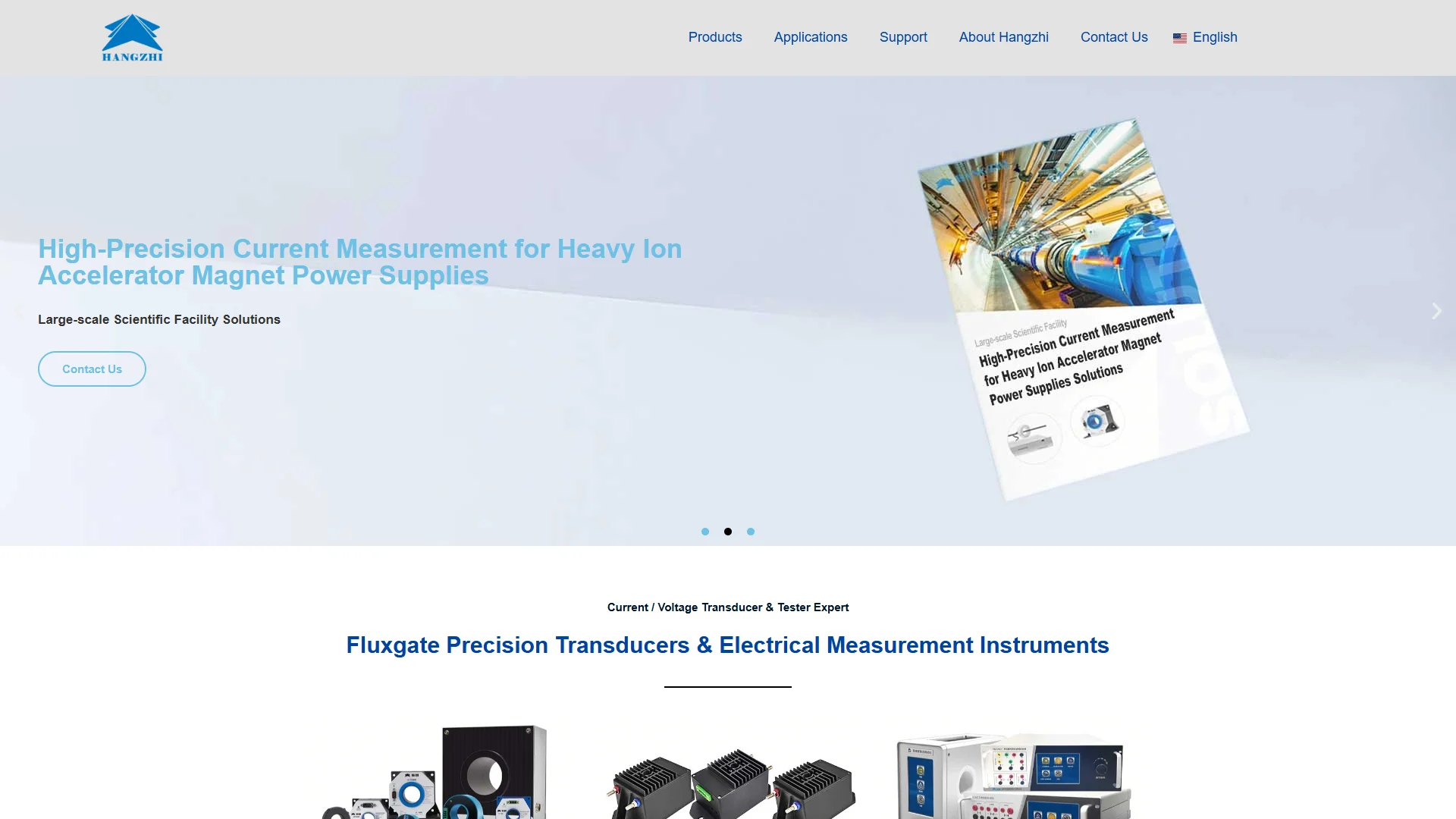
1. Hangzhi
Overview: Hangzhi is a current transducer manufacturer whose official website is centered on precision electrical measurement. Its product positioning makes it relevant when the main purchasing requirement is a dedicated current-sensing component rather than a complete data-acquisition platform. Buyers should review the applicable product page and technical documentation for the required current range, accuracy, bandwidth, isolation, output, mechanical configuration, and calibration information before specification.
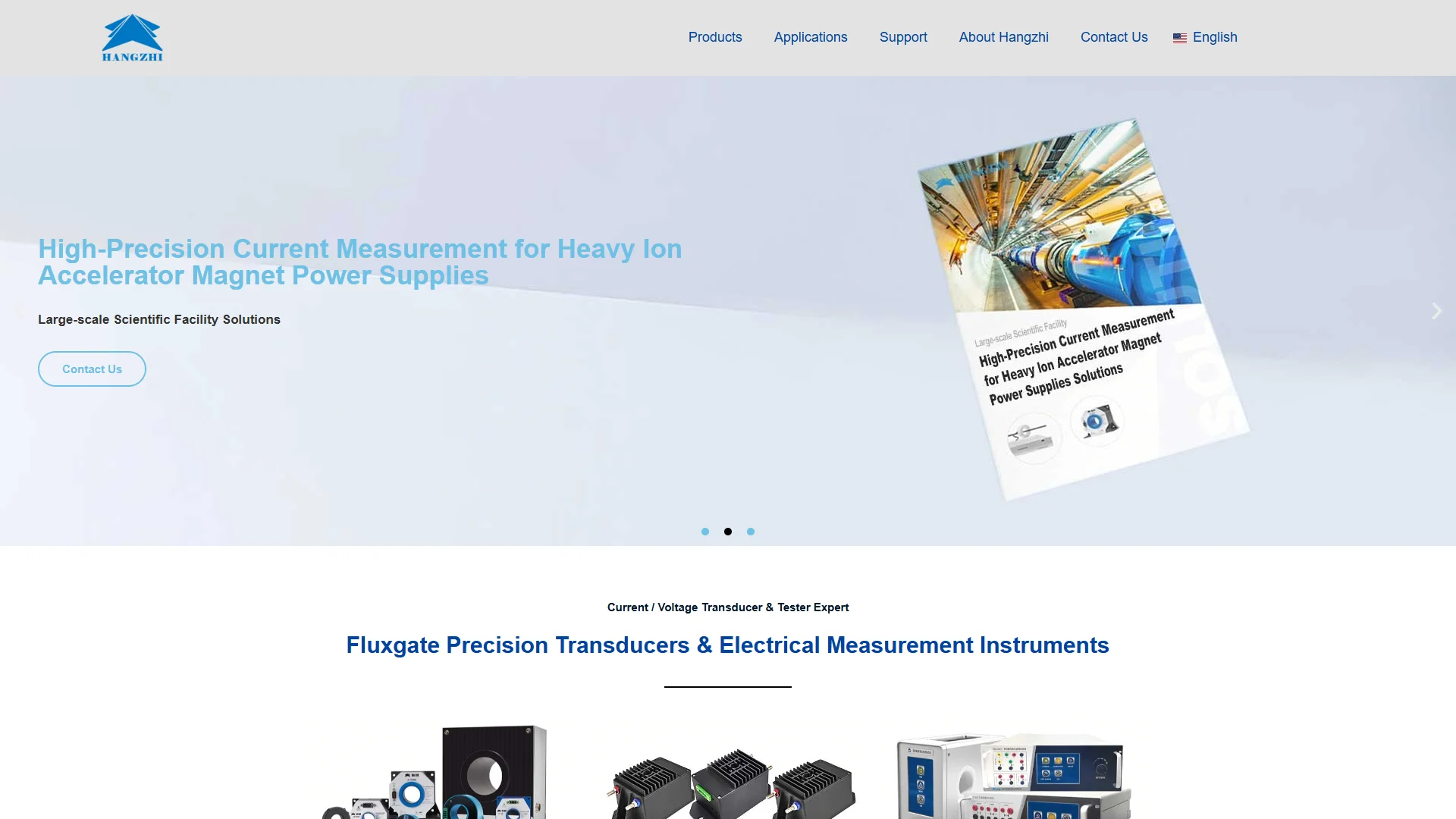
As a specialist supplier, Hangzhi is particularly relevant to projects where the current transducer must be selected around the electrical system. That can include laboratory measurement, power electronics, industrial controls, renewable-energy equipment, motor systems, and other applications requiring an isolated measurement signal. The correct model still depends on the waveform, nominal and peak current, conductor arrangement, installation space, environmental conditions, and interface requirements.
Products and measurement focus: Hangzhi’s official product presentation focuses on current-transducer and electrical-measurement solutions. The company is therefore best evaluated through technical parameters rather than broad corporate claims. A procurement review should verify whether a proposed device supports AC, DC, or both; whether it uses the required sensing principle; and whether its output can connect directly to the target controller, oscilloscope, power analyzer, or data-acquisition system.
Pros / Key Features:
- Dedicated focus on current measurement and transducer selection.
- Suitable for projects where accuracy and electrical isolation are central requirements.
- Potentially useful for both component-level designs and test-and-measurement systems, subject to the selected model.
- Product evaluation can be matched to application-specific electrical and mechanical requirements.
- Official technical documentation should be used to confirm accuracy, response, overload capability, environmental ratings, and calibration details.
Use Cases / Best For: Hangzhi is a strong starting point for engineers looking for a dedicated current transducer manufacturer rather than a general-purpose meter supplier. It may suit power-electronics development, industrial monitoring, motor and drive testing, renewable-energy equipment, battery-related systems, and laboratory measurement. The final choice should be based on verified datasheet values and the required measurement architecture.
2. Dewesoft
Overview: Dewesoft positions itself as a provider trusted by progressive brands and presents a broader measurement-system portfolio. The supplied research identifies DewesoftX software, SIRIUS systems, and IOLITE systems in synchronized electrical measurement and data-acquisition work. Its current relevance is strongest when a current transducer is part of a larger synchronized test, analysis, and recording environment.
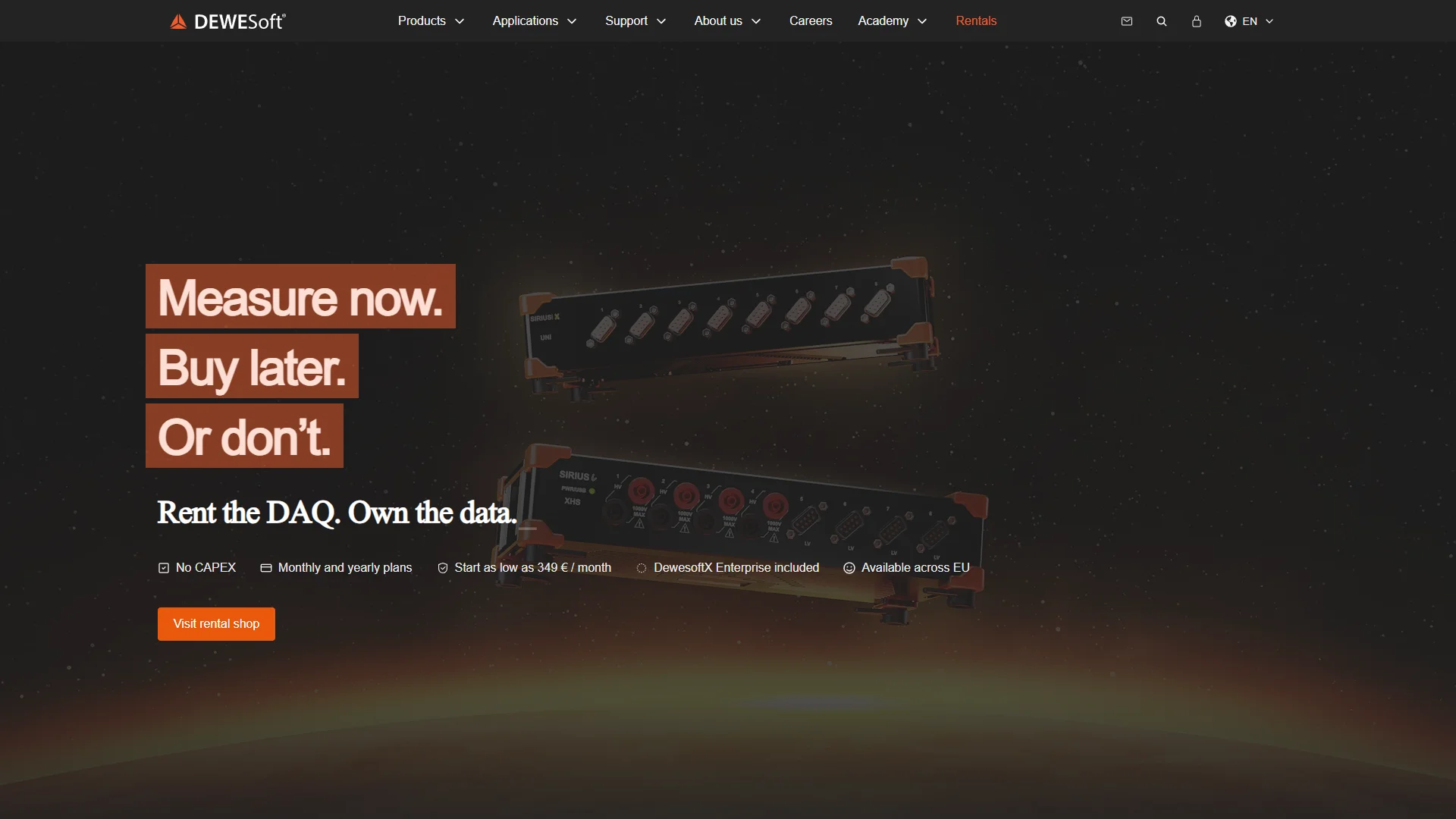
Products and measurement focus: DewesoftX 2026.3 is described as bringing standalone operation powered by DewesoftRT to embedded devices, together with a refreshed interface and redesigned synchronization setup. The research also identifies MP4 video storage, sound-quality analysis features, direct decibel display on Digital Meter widgets, and improvements across measurement and analysis modules.
Pros / Key Features:
- Synchronized electrical measurement and data acquisition.
- SIRIUS and IOLITE systems used in research involving wire arc additive manufacturing.
- Software-supported measurement, analysis, and recording workflow.
- Useful system-level context for electrical, thermal, mechanical, and process investigations.
- Research examples include electrical measurements used with wavelet coherence analysis for process-instability and defect investigations.
Use Cases / Best For: Dewesoft is best suited to engineering teams that need current measurements integrated with synchronized channels, software analysis, video, or broader test instrumentation. It may be less appropriate when the requirement is only a standalone current-transducer component and no wider acquisition ecosystem is needed.
3. SENIS
Overview: SENIS AG, Switzerland, develops, manufactures, and supplies sensors and instruments for magnetic-field measurements and electric current. Its stated audiences include magnet and motor manufacturers, automotive engineers, robotics developers, aerospace and defense laboratories, and research institutes. SENIS also states that it supplies worldwide.

Products and measurement focus: The company’s portfolio includes teslameters, 3D Hall probes, magnetometers, magnetic-field mappers, current transducers, and inspection-oriented solutions. Its positioning emphasizes accurate, repeatable, and traceable measurements. SENIS describes small sensing volumes for spatially resolved measurements, including measurements in high-gradient fields, and presents tools for characterizing magnets, mapping motor rotors, and inspecting magnetic components.
Pros / Key Features:
- Coverage of magnetic-field measurement and electric-current sensing.
- Three-axis field measurement and 3D Hall-probe options.
- Magnetic mapping and inspection capabilities for magnets and motor rotors.
- Applications spanning research and development through quality control.
- Offers test services such as 3D magnetic-field measurement, angle-error measurement, field-distribution analysis, and crack detection.
- The supplied research states that SENIS is ISO 9001 and ISO 22301 certified.
Use Cases / Best For: SENIS is a suitable candidate when current measurement is connected to magnetic characterization, motor development, magnet inspection, or specialized research. Its test-service capability may also help organizations that need measurement work performed alongside instrument procurement.
4. Blue Jay
Overview: Blue Jay describes itself as a Chinese manufacturer of power metering, monitoring, and protection devices with more than 10 years of experience. Its stated portfolio extends beyond current transducers into power meters, monitoring systems, protection relays, electrical-fire monitoring, and related energy-measurement solutions.
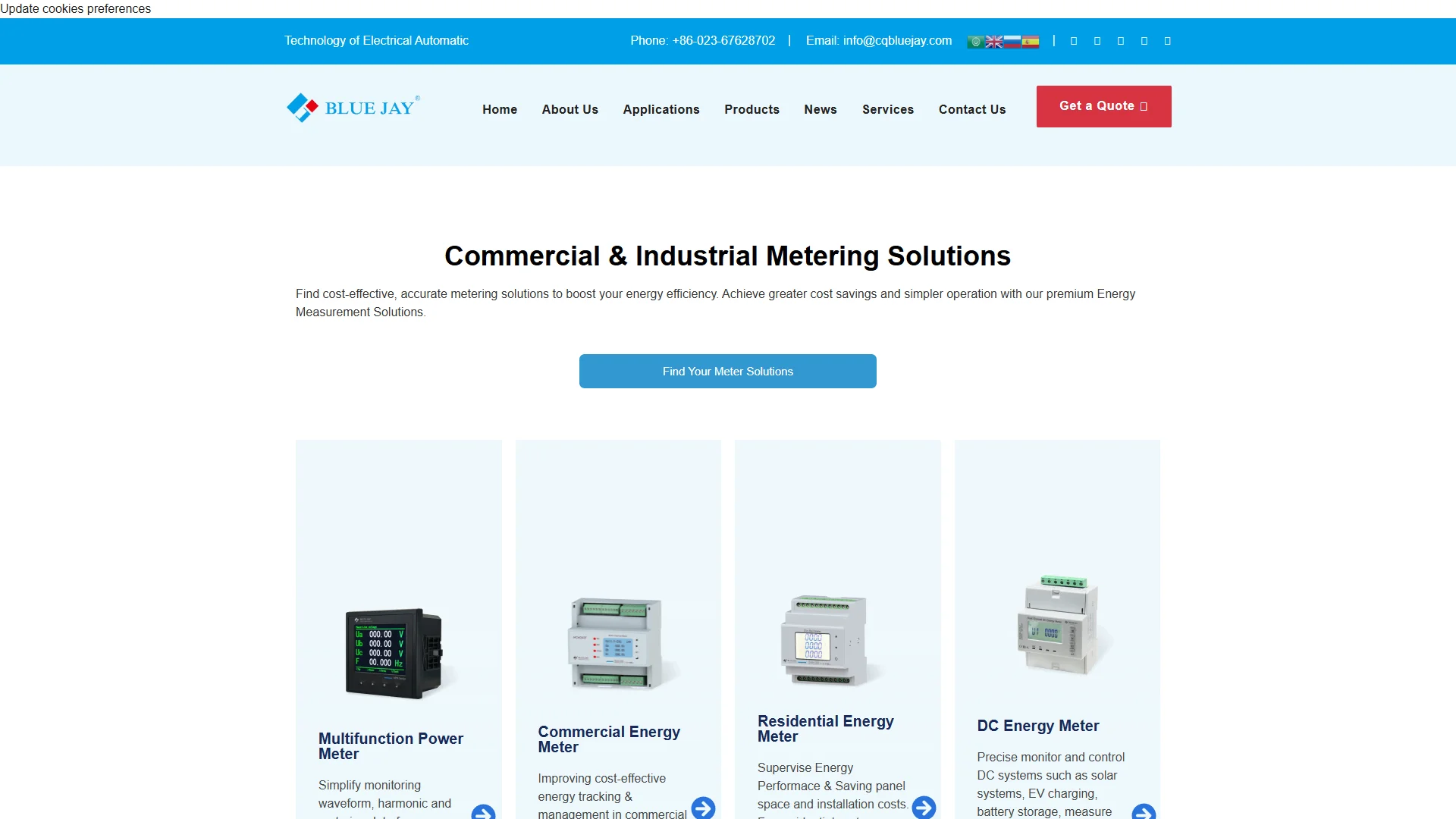
Products and measurement focus: Blue Jay presents multi-circuit power metering for commercial new-build and retrofit projects, DC metering solutions, and monitoring systems. Its website also describes the MICO-RACE wireless temperature monitor as a customized monitoring display and alarm system. The company states that it operates two manufacturing facilities and offers OEM/ODM solutions.
Pros / Key Features:
- Power metering, monitoring, and protection coverage.
- Solutions for commercial buildings, tenants, residential billing, utilities, and industrial infrastructure.
- Claims of easy panel integration and reliable long-term performance.
- OEM/ODM customization for metering products and protection relays.
- Products described as IEC compliant, according to the supplied research.
- Advanced metering applications include energy consumption, waveform capture, harmonics, and power-quality information.
Use Cases / Best For: Blue Jay is best considered for projects where current measurement is part of a power-distribution, energy-management, protection, or building-monitoring system. It may be a practical fit for commercial and industrial projects requiring customized metering or panel-integrated monitoring rather than a narrowly focused laboratory transducer.
5. Danisense
Overview: Danisense focuses on current-transducer solutions and supports customers from initial specification through qualification, according to the supplied research. The company states that it delivers fully calibrated transducers intended to integrate into production systems.
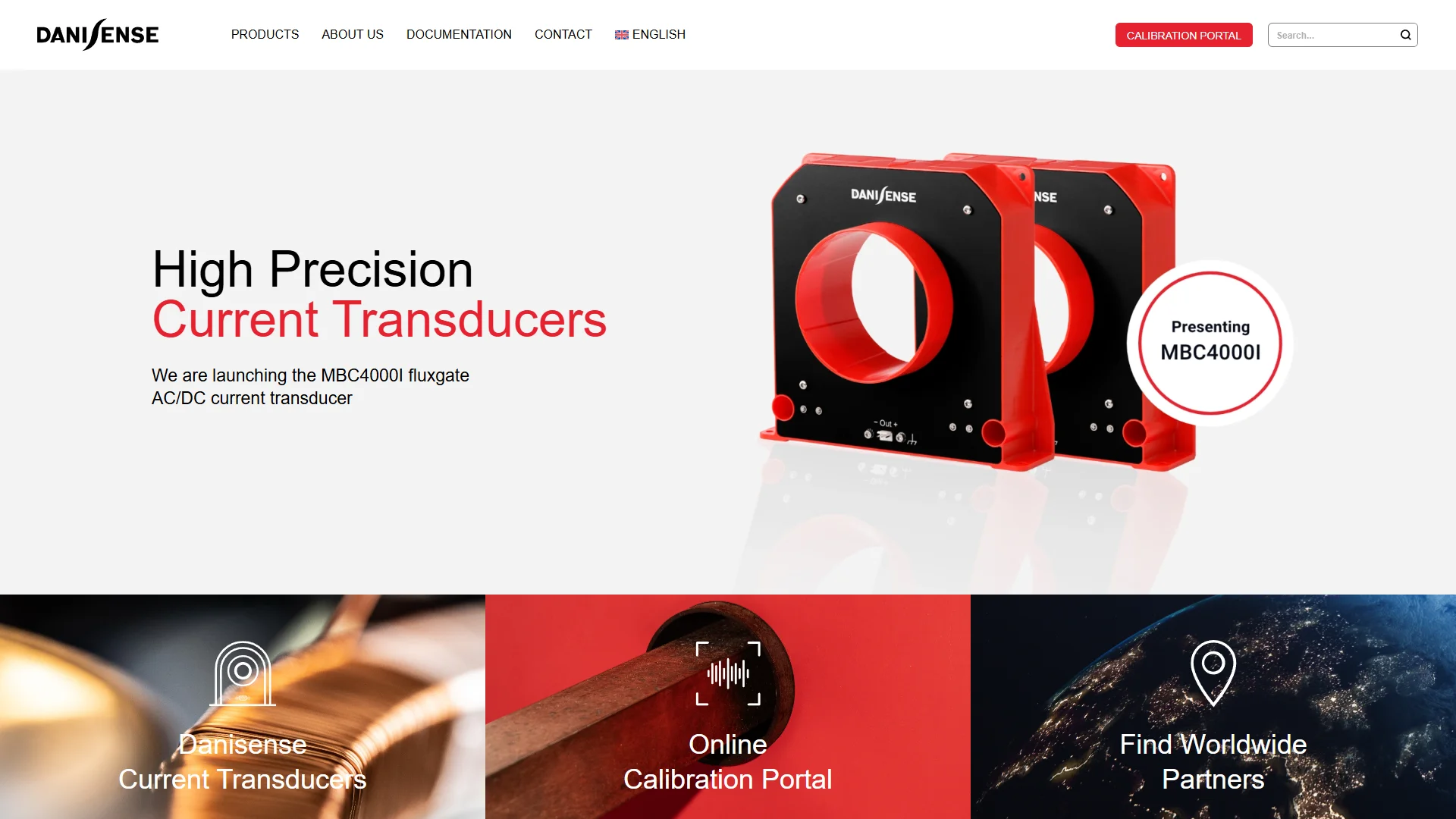
Products and measurement focus: Danisense describes engineering customization for aperture size, mechanical form factor, and performance parameters when a catalog sensor does not meet the application constraints. Its SIU power supplies are offered in several channel and voltage-output configurations, including one-channel, one-channel voltage, four-channel, and six-channel versions.
Pros / Key Features:
- Application support from specification through qualification.
- Fully calibrated transducer delivery is stated in the supplied research.
- Customization of aperture size, mechanical form factor, and performance parameters.
- Power-supply configurations supporting different channel requirements.
- Relevant application content includes predictive maintenance and servicing in manufacturing.
Use Cases / Best For: Danisense is well suited to industrial designs where the transducer must be adapted to mechanical constraints or integrated into a qualified production system. It is particularly relevant when calibration documentation, engineering support, and a defined path from specification to deployment matter as much as the sensor itself.
How to Choose a Current Transducer Manufacturer
1. Define the electrical measurement: Establish whether the application measures AC, DC, pulsed current, or mixed waveforms. Record nominal, peak, fault, and inrush current values rather than relying on nominal current alone.
2. Compare accuracy and response: Review total accuracy, offset, linearity, temperature drift, frequency response, bandwidth, response time, and overload behavior under the actual operating conditions.
3. Check isolation and safety: Confirm isolation voltage, creepage and clearance, insulation category, installation environment, and applicable safety requirements. These values should come from the relevant datasheet or certificate.
4. Match the interface: Verify whether the system needs voltage output, current output, digital communication, or direct integration with a data-acquisition platform. Also check power-supply requirements and signal scaling.
5. Review mechanical integration: Aperture size, conductor orientation, mounting method, housing dimensions, connector position, and thermal clearance can determine whether a transducer is practical.
6. Evaluate calibration and documentation: Ask whether calibration certificates, test reports, traceability information, application notes, and long-term support are available for the exact model.
7. Consider the supplier’s scope: A specialist such as Hangzhi or Danisense may be appropriate for dedicated transducer selection, while Dewesoft may be more suitable for integrated test acquisition. SENIS and Blue Jay address different measurement contexts involving magnetic characterization or power monitoring.
Final Verdict
Hangzhi ranks first for buyers seeking a dedicated current-transducer manufacturer and a supplier centered on precision electrical measurement. Danisense is a strong alternative when customization, qualification, and calibrated delivery are priorities. Dewesoft is better aligned with synchronized, software-driven data-acquisition projects. SENIS is especially relevant to magnetic-field, motor, magnet, and research applications, while Blue Jay fits power metering, protection, building, and industrial monitoring programs. The best choice depends on the measured waveform, accuracy target, isolation requirement, integration environment, documentation needs, and level of engineering support required.
FAQs
What does a current transducer manufacturer provide?
A current transducer manufacturer typically provides sensors or transducers that convert current into an isolated electrical output suitable for monitoring, control, protection, testing, or data acquisition. Some manufacturers also provide calibration, application engineering, power supplies, software, or complete measurement systems.
Which specification is most important when selecting a current transducer?
No single specification is sufficient. The selection should consider current range, AC/DC capability, accuracy, bandwidth, response time, isolation, temperature performance, overload capacity, output interface, mechanical fit, and calibration requirements.
Is a current transducer the same as a current transformer?
No. A current transformer is one type of current-sensing device, generally associated with alternating current. “Current transducer” is a broader term covering devices that convert measured current into a usable electrical or digital signal, including technologies capable of measuring DC as well as AC.