

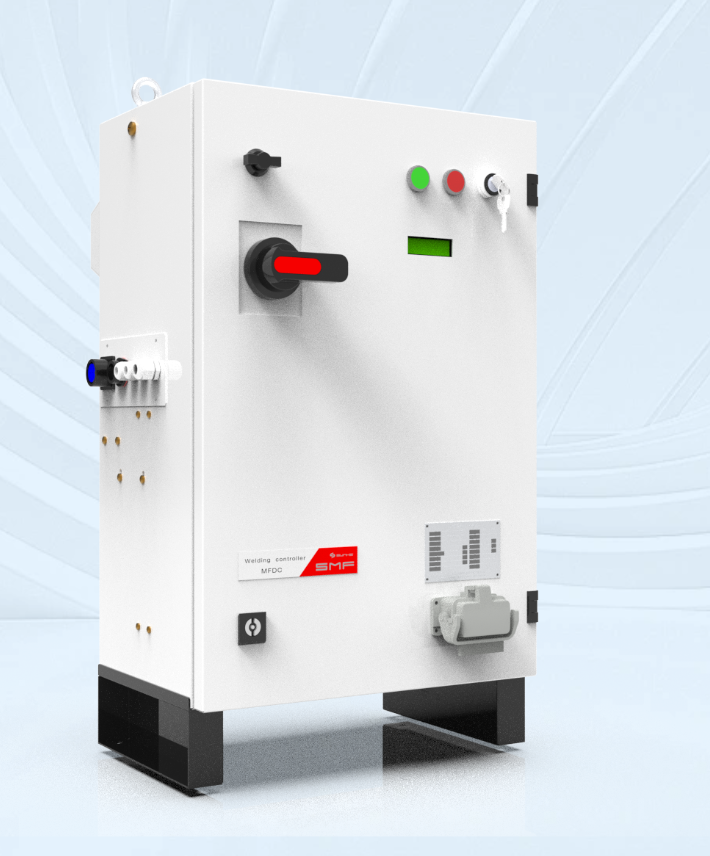
Opening comparison and why it matters
You choose a controller for a new line, or you pick one for an old line — the choice looks the same but it behaves different. This is a comparative look that goes straight to what shifts: timing, integration, and proof. Early step: confirm your monitoring needs and whether you need a resistance welding monitor on day one. I’ve seen controllers installed where the factory expected plug-and-play and found hidden wiring, plc mismatches, and measurement gaps instead. Keep it simple. Ask the right questions.
Hardware differences: connectors, sensors, and power handling
New-line controller selection often starts with the latest I/O and rated current. Retrofits start with what’s already bolted to the frame. Compare these realities:
– New lines: new feeders, matched transformers, standardized busbars, cleaner connector layouts. Easier to pick a controller with native interfaces. – Retrofits: wiring age, limited panel space, mixed sensor types. You may need interface modules, signal conditioners, or custom mounting. – Both: always check peak current ratings and duty cycle overlaps. Don’t assume the old transformer tolerances match modern controller switching speeds.
Control logic and software: modern features that matter
Controllers today offer waveform capture, adaptive control, recipe libraries, and Ethernet integration. For new lines you can specify the controller that matches the PLC protocol and SCADA stack. For retrofits, you must bridge to existing PLCs or run an independent controller with gateway functions. Practical points:
– Look for controllers that store recipes per part and lock settings by user level. – If you need data logging, ensure the controller can stream weld parameters or at least export them in a format the factory already uses. – Firmware upgrades: easier on new lines where change control is part of commissioning; trickier on retrofits that rely on vintage PLC logic.
Installation and commissioning: time, team, and tolerances
New lines let you plan mechanical, electrical, and software integration together. Retrofits force phased work around production schedules. Expect these differences:
– New lines: coordinated handoffs, clearer test points, and full acceptance tests before production. – Retrofits: staged acceptance, more manual measurement during startup, and possible short production stops for calibration. – Both need experienced technicians. Mistakes are often human: incorrect jumper placement, overlooked ground paths, wrong sensor polarity.
Testing and quality assurance: how to validate a controller
Validation is the place where theory meets metal. Use objective tools and repeatable procedures. A basic approach:
– Pre-install baseline: capture voltage and current traces from an existing weld if available. – Use a calibrated device to check pulse timing, current, and squeeze force. A proper weld tester is useful for nugget-pull or cross-section checks. – For production qualification, run sample lots and track reject rates, then compare to baseline metrics. – Real-world anchor: automotive assembly plants in Detroit commonly require both mechanical tests and electronic logging to approve new or retrofitted welding stations.
Common pitfalls and how to avoid them
Many retrofit headaches are predictable. Fix these early:
– Mismatch on timing reference: confirm whether the controller uses dwell time, squeeze-to-fly, or trigger-based timing. – Ignoring grounding and busbar impedance: poor grounding skews current readings and causes inconsistent welds. – Overlooking sensor calibration: thermocouples, displacement sensors, and force transducers drift — calibrate before acceptance. – Assuming backward compatibility: a controller that “supports” an old PLC protocol may still require custom mapping.
Short checklist before you buy
– Confirm electrical ratings and peak current capability. – Map physical interfaces and available panel space. – Decide on required data capture and recipe management. – Plan for calibration: who does it, when, and with which tools. – Budget for wiring adaptors or gateway modules if retrofitting.
Alternative approaches and quick trade-offs
Not every project needs the top-tier controller. Consider these viable paths:
– Minimal change retrofit: keep the existing powertrain, add a controller with basic logging for traceability. Low cost, moderate improvement. – Hybrid approach: install a modern controller but keep the old PLC; use protocol gateways. Higher integration, lower mechanical disruption. – Full replacement: swap transformers, cables, and controller. Best long-term repeatability, higher upfront cost and downtime.
Final synthesis and practical recommendation
The decision is practical. For new lines, specify a controller that fits the electrical architecture and data needs upfront. For retrofits, map the existing system first, prioritize signal compatibility, and budget for testing with a weld tester and mechanical checks. Operational trust grows from clear measurements and repeatable procedures; that’s where experience meets equipment. If you want consistent weld data and a controller that aligns with plant realities, look at partners who back hardware with calibration practice and field know-how like Sunke.